Shann Holmberg
Head of Product
Insights, strategies, and real-world playbooks on AI-powered marketing.
APR 21, 2026
The Ultimate Guide to Lovable in 2026
In February 2026, Lovable added $100 million in revenue in a single month. The company had 146 employees at the time (TechCrunch, 2026).
That number stops most people. Not because it’s large - it’s because of how it was produced. No enterprise sales team. No six-month procurement cycle. Just a product that lets non-technical founders describe what they want to build, and then builds it.
Andrej Karpathy coined the term “vibe coding” in February 2025 to describe exactly this: the practice of building software through natural language instead of syntax. Lovable is the tool that made that mainstream.
This guide covers everything you need to decide whether Lovable is the right tool for what you’re building. You’ll find what it actually generates, what it cannot generate, how the credit system works in real-world terms, how it stacks up against the alternatives, and what the post-export path looks like if you eventually need a developer to take the codebase further.
For a practical look at automating workflows with AI tools, see how to integrate Claude with Slack for automated marketing briefs.
Key Takeaways
- Lovable (formerly GPT Engineer) turns natural language prompts into full-stack React + Supabase web apps and reached $400M ARR in February 2026 with 8 million users (TechCrunch, 2026).
- The free plan gives 5 credits per day - enough to prototype one feature. Pro is $25/month (100 credits); Business is $50/month with SSO and team workspaces.
- Lovable generates React + TypeScript + Tailwind + Supabase. It does not output Python backends, Next.js apps, native mobile apps, or WordPress sites.
- More than half of Fortune 500 companies use Lovable. Zendesk cut its prototype cycle from 6 weeks to 3 hours.
What is Lovable, and how does it work?
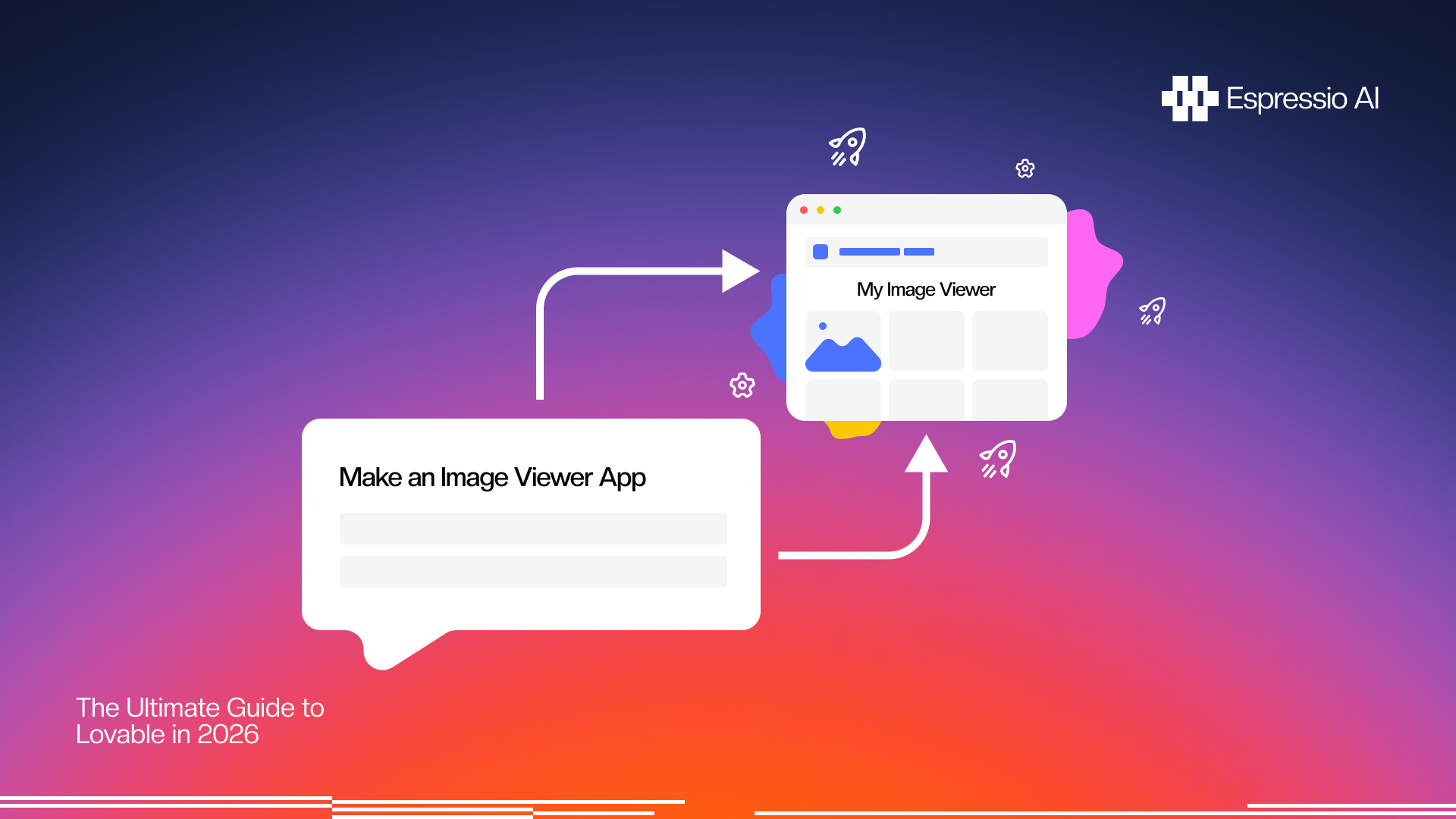
Lovable is an AI-powered full-stack web app builder. You describe what you want in plain language, and it generates a working React + Supabase application (frontend, database schema, authentication, and API connections) without writing a line of code. The platform had generated 25 million total projects in its first year, with more than 100,000 new projects created every day (TechCrunch, Dec 2025).
The product started as GPT Engineer, an open-source project that accumulated more than 50,000 GitHub stars before its creator, Anton Osika, turned it into a commercial product. Lovable launched under that name in December 2024. Its December 2025 Series B brought in CapitalG, Menlo Ventures, Nvidia Ventures, Salesforce Ventures, and Databricks Ventures as investors.
How the build process actually works:
- You write a prompt describing your app. The more specific, the better, though you don’t need to know any technical terms.
- Plan Mode (added February 2026) shows you what Lovable intends to build before it writes a single line of code. You can edit the plan, remove features, or redirect the scope.
- Agent Mode runs the build. You watch the code generate in real time, component by component, file by file.
- Visual Edits let you click any element directly and change colors, fonts, or layout without prompting. It’s closer to Figma than to a code editor.
- From there, you can publish to a
.lovable.appsubdomain, connect a custom domain (Pro plan), or export the full codebase to GitHub.
The “vibe coding” framing matters here. Karpathy described it as “fully giving in to the vibes” - coding without worrying about syntax or structure, letting the AI handle implementation while you focus on what the app should do. Lovable is the most commercially successful product built on that premise.
Lovable uses Claude under the hood for code generation, which explains the quality of its output on complex prompts. The architecture is transparent: you’re getting Claude’s reasoning applied specifically to full-stack React + Supabase patterns, with a purpose-built UI and memory layer on top.
According to TechCrunch’s March 2026 reporting, Lovable reached $400M ARR with just 146 employees. At $2.77M revenue per employee, that’s a multiple of the SaaS industry average by nearly any benchmark, and it’s a product of what they built: the platform scales without adding headcount because the software itself handles what would otherwise require a services team.
How fast has Lovable grown?
No enterprise software company has grown this fast. Lovable went from $4M ARR in January 2025 to $400M ARR fourteen months later, a 100x increase, while staying at 146 employees (TechCrunch, 2026). February 2026 alone added $100M in recurring revenue - a single month that outpaced what most SaaS companies do in a year.
The full ARR timeline, assembled from TechCrunch reporting and Sacra’s tracking:
| Date | ARR | Milestone |
|---|---|---|
| January 2025 | $4M | Commercial launch |
| March 2025 | $17M | Early viral growth |
| July 2025 | $100M | $1.8B valuation, 2.3M users |
| November 2025 | $200M | Nearing 8M users |
| January 2026 | $300M | $6.6B valuation |
| February 2026 | $400M | $100M added in 30 days |
The user count followed the same arc. Lovable had 2.3 million users in July 2025. By November 2025, it was approaching 8 million (TechCrunch, 2025). Its December 2025 Series B round raised $330M at a $6.6 billion valuation. The valuation had nearly tripled in five months.
More than half of Fortune 500 companies now use Lovable (TechCrunch, 2026). That’s the data point most observers find hardest to explain - not the ARR, but the enterprise penetration at this speed.
Lovable is reportedly targeting $1 billion ARR within 12 months of February 2026. At the pace they’ve been growing, the trajectory supports that.
The growth makes more sense when you reframe who Lovable is competing with. The real market it’s eating is the one Webflow and Bubble have been chasing for a decade: the gap between “I have an idea” and “I have a working product.” Developers have always had tools. Non-technical founders have always had to hire someone. Lovable is the first product to close that gap at the speed and price point that makes the math obvious.
For non-technical founders taking their first steps with AI automation, connecting Claude with Slack to automate marketing briefs shows how the same “describe what you want” principle extends beyond product building.
What can you build with Lovable?
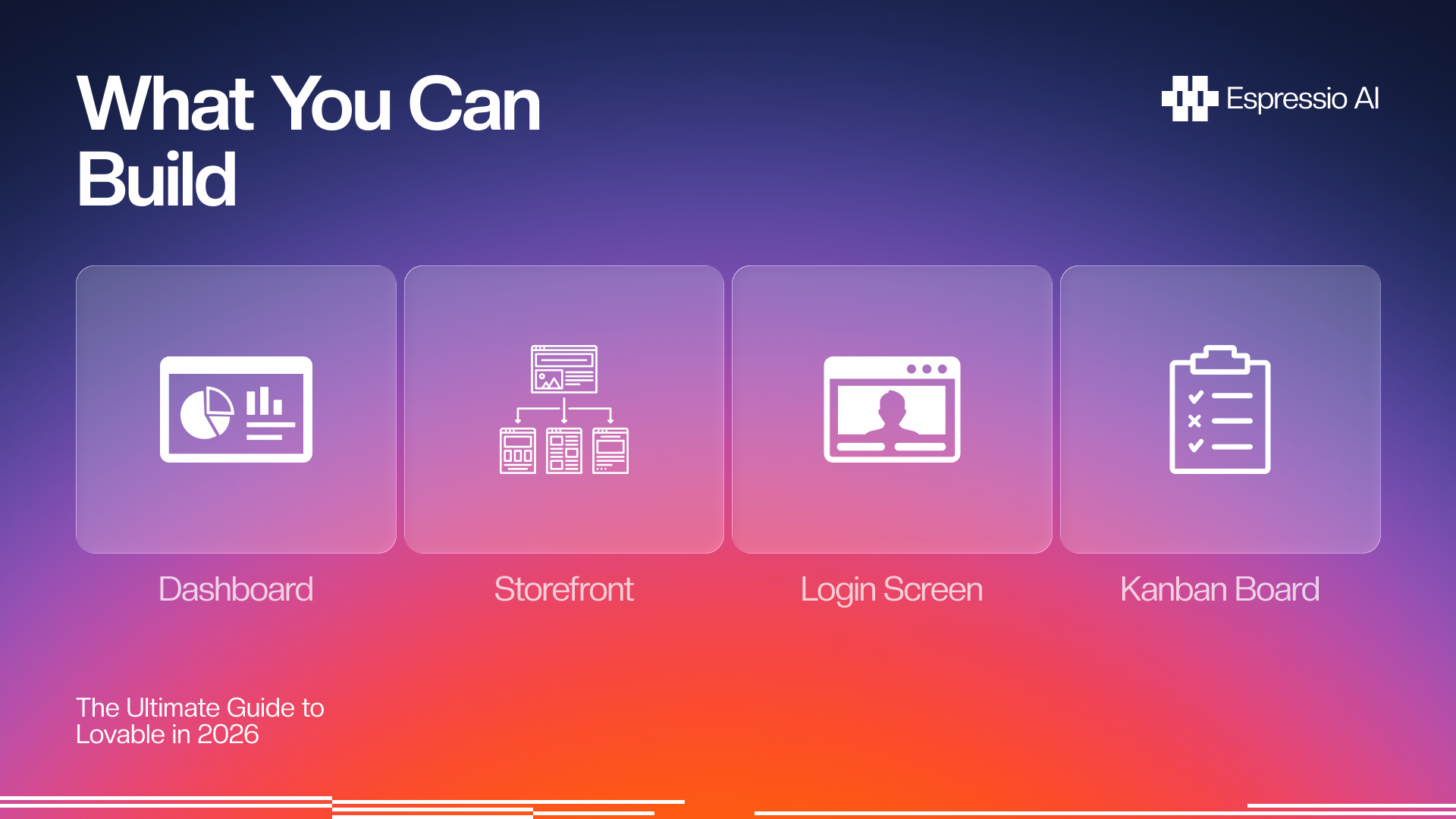
Lovable generates production-ready React + TypeScript + Supabase web apps. Gartner projected that 70% of new enterprise applications will use no-code or low-code platforms by 2025 (Gartner, via Kissflow, 2021). Lovable is where much of that shift is landing - not because it’s the only option, but because it’s the only one that handles frontend, backend, auth, and database in a single prompt chain without configuration.
The full tech stack Lovable generates:
| Layer | Technology |
|---|---|
| Frontend | React + Vite + TypeScript |
| UI library | Tailwind CSS + shadcn/ui |
| Backend | Supabase (PostgreSQL + Auth + Storage) |
| Payments | Stripe (connect via prompt) |
| Deployment | Lovable hosting or GitHub export |
What works well:
- Internal tools and admin panels
- SaaS dashboards with user authentication
- Landing pages and marketing sites
- E-commerce storefronts (Shopify integration added October 2025)
- MVPs and investor demos
- Prototypes for user research
What Lovable does not build:
- Chrome extensions
- Python backends
- WordPress sites
- Next.js apps (by default)
- Native iOS or Android apps
Example prompts to understand the range:
Simple build:
Build a task management app where users can log in, create projects,
add tasks with due dates, and mark them complete. Clean minimal UI.
Complex build:
Build a SaaS lead tracker with Supabase auth (email + Google sign-in),
a dashboard showing lead status (pipeline stage, last contact date, deal value),
and a Stripe-gated Pro tier that unlocks CSV export and custom fields.
The gap between those two prompts comes down to credits, not hours. Both can be working apps by the end of an afternoon. The complex build will use more credits and likely need one or two revision prompts to get the Stripe integration right, but the core application generates without any manual code.
According to a 2025 study, Lovable Pro at $25/month compares to a traditional MVP engagement at $15,000 or more and a three-month timeline (lowcode.agency, 2025). That cost difference is what’s driving adoption among early-stage founders: validating an idea no longer requires a capital commitment most pre-seed companies don’t have.
How does Lovable pricing work in 2026?
Lovable has four plans. The free plan gives 5 credits per day, enough to prototype one small feature or explore the interface. Pro at $25/month unlocks 100 monthly credits, custom domains, and credit rollovers. Business at $50/month adds SSO, team workspaces, and the security center needed for enterprise procurement.
| Plan | Price | Credits | Key features |
|---|---|---|---|
| Free | $0 | 5 daily | Base features, unlimited collaborators, community support |
| Pro | $25/month | 100/month + 5 daily | Custom domains, no Lovable badge, credit rollovers, roles and permissions |
| Business | $50/month | 100/month | SSO, team workspaces, internal publish, design templates, security center |
| Enterprise | Custom | Volume-based | SCIM, audit logs, dedicated support, custom connectors, SOC 2 / ISO 27001 |
What actually counts as a credit:
A simple prompt that adds a button or tweaks a layout uses roughly one credit. A prompt that builds a new database-connected feature or integrates a payment flow typically uses two to three. Rebuilding a large section of your app from scratch can burn five or more. You get the hang of it quickly: small, specific prompts are more credit-efficient than vague, broad ones.
Credit-burn reality check: We built a 10-screen SaaS lead tracker with Supabase auth, a pipeline dashboard, and Stripe-gated CSV export from scratch on the Pro plan. The full build took 34 prompts and 28 credits across two sessions. At $25/month for 100 credits, that entire MVP cost roughly $7 in compute. The same project scoped to a freelancer would start at $8,000. The credit math isn’t an abstraction; it’s the reason this product exists.
Credit top-ups are available on Pro and above if you exhaust your monthly allocation. Check lovable.dev/pricing for the current offer before committing.

How free compares to alternatives:
Bolt.new’s free tier provides up to 300,000 AI tokens per day, which translates to more raw compute but no native backend - you’d need to set up your own Supabase or Firebase manually. v0 by Vercel gives limited free generations for UI components, not full applications. Lovable’s 5-credit daily limit is more restrictive for casual browsing, but for anyone building a real app, the Pro plan is the right starting point.
For a look at how Claude pricing compares across use cases, see how sales teams use Claude with HubSpot.
Step-by-step: how do you build your first app in Lovable?
Create a free account, write one clear paragraph describing your app, and let Lovable’s Plan Mode show you what it intends to build before a single line of code is written. A working prototype can be live in under 10 minutes. No credit card required to start.
The seven-step build process:
-
Sign up at lovable.dev using Google or GitHub - takes about 30 seconds.
-
Click New Project and name it something descriptive. Your first prompt is the most important one: include the purpose of the app, who uses it, and the two or three core features it needs. “Build me an app” produces a generic result. “Build a client invoice tracker for freelancers, with Supabase auth, a dashboard showing outstanding and paid invoices, and a PDF export button” produces something usable.
-
Review the Plan Mode output before Agent Mode runs. Lovable shows you exactly what it will build - the components, the database schema, the user flows. Edit the plan if the scope isn’t right. This step saves credits.
-
Watch Agent Mode generate the app in real time. The code appears in the file tree on the right while the preview updates on the left. For a moderately complex app, this takes two to five minutes.
-
Use Visual Edits to adjust styling. Click any element in the preview and change fonts, colors, spacing, or layout directly. No prompt needed for cosmetic changes.
-
Connect Supabase under Settings if your app needs a real database and user authentication. Lovable generates the schema automatically based on your prompt. Paste your existing Supabase schema into the chat if you have one - Lovable reads it and generates accurately against your existing tables.
-
Deploy or export. Publish to a
.lovable.appsubdomain immediately. Connect a custom domain on Pro. Or export the full codebase to a GitHub repo and take it from there.
Tips for better results:
- Use Plan Mode on any prompt longer than two sentences.
- Describe the user’s action, not the technical implementation (“Let sales reps add contacts from the pipeline view” rather than “Create a form with name, email, and company fields”).
- When you hit a bug loop (Lovable regenerates the same error repeatedly), use Revert to Previous Version instead of prompting around it. Then describe the fix explicitly in Dev Mode.
- Paste error messages directly into the chat. Lovable is better at fixing errors it can see than errors it has to infer.
Zendesk reduced its prototype cycle from six weeks to three hours after adopting Lovable (TechCrunch, 2026). The gap between “concept” and “testable prototype” is the part Lovable collapses most effectively.
After you export to GitHub: the developer handoff
When you export a Lovable project to GitHub, you’re getting a standard Vite + React app with a Supabase integration. Before the codebase is production-ready, a developer needs to handle:
- Set environment variables. Supabase URL and anon key live in Lovable’s settings. They need to move into your CI/CD pipeline’s secret store (Vercel environment variables, Netlify env, or GitHub Actions secrets).
- Choose a deployment target. The exported code deploys to Vercel, Netlify, or Cloudflare Pages in under five minutes; it’s a standard Vite build.
- Review Row Level Security. Lovable generates functional Supabase RLS policies, but they should be audited before handling real user data at scale. A developer familiar with PostgreSQL can do this in an afternoon.
- Evaluate generated Edge Functions. Complex business logic (billing webhooks, multi-step data transformations) is a starting point, not final code. Flag generated functions for review before going to production.

None of this is a reason to avoid Lovable. It’s information every founder building toward production should have before they export.
For teams ready to connect Claude to existing business tools after the build, using Claude with HubSpot for automated sales follow-up covers the same workflow principle applied to CRM pipelines.
How does Lovable compare to Bolt.new, Cursor, and v0?
Most founders evaluating Lovable aren’t choosing between Lovable and Cursor. They’re choosing between Lovable and hiring a developer. A junior developer costs $60,000-$100,000 per year in salary and takes three months to ramp. A dev agency MVP engagement starts at $15,000 and takes three to six months. Lovable Pro costs $25/month and can produce the same prototype in an afternoon (lowcode.agency, 2025).
That reframe matters because it changes how you evaluate the product. The question isn’t “is Lovable’s code as good as a senior engineer’s code?” It’s “does this prototype validate my idea well enough to raise a pre-seed round or sign the first five customers?” For that question, Lovable wins almost every time.
Primary comparison: Lovable vs. traditional build options
| Build path | Typical cost | Time to prototype | Backend included |
|---|---|---|---|
| Lovable Pro | $25/month | 1 day | Yes (Supabase) |
| Freelancer | $5,000-$15,000 | 3-6 weeks | Manual setup |
| Dev agency | $15,000-$50,000 | 8-24 weeks | Yes (custom) |
| In-house dev | $60,000-$100,000/yr | 12+ weeks | Yes (custom) |
Webflow ($23-$39/month) and Bubble ($29-$349+/month) are often mentioned in the same breath as Lovable, and some competitor articles compare them directly. The honest answer: Webflow has no real backend and no auth out of the box. Bubble has a steeper learning curve and a proprietary logic layer that creates lock-in of its own. Neither produces exportable code. For founders who want a real database, real auth, and the ability to eventually hand the codebase to a developer, Lovable is the more direct path.
Secondary comparison: Lovable vs. AI tools
| Lovable | Bolt.new | Cursor | v0 (Vercel) | |
|---|---|---|---|---|
| Target user | Non-developer founders | Designers + non-devs | Developers | Frontend devs |
| Output | Full-stack app | Frontend-heavy | Code suggestions | UI components |
| Backend | Supabase built-in | Manual setup | Manual | None |
| Free tier | 5 credits/day | 300K tokens/day | Free (limited) | Free (limited) |
| Paid from | $25/month | $20/month | $20/month | $20/month |
| GitHub sync | Bidirectional | Yes | N/A - it’s an IDE | Export only |
| Best for | MVPs, SaaS tools | Prototypes, landing pages | AI-assisted dev | React UI work |
Pick Lovable when you need a working app with real data persistence and user accounts. Bolt.new is the faster choice for a polished landing page or prototype where a database isn’t needed. Cursor belongs in a developer’s existing workflow as an AI assistant inside the code editor. For a React component rather than a full application, v0 is the right scope.
21% of Y Combinator’s W2025 batch have codebases that are 91% or more AI-generated (SecondTalent, 2025). That statistic signals where the industry is going - not whether any specific tool wins. The founders who are moving fastest are the ones who stopped treating “AI-generated code” as a category and started asking which tool gets them to a live URL the fastest.
What are Lovable’s limitations?
Lovable cannot build Chrome extensions, Python backends, WordPress sites, Next.js apps by default, or native iOS or Android apps. For production-scale applications with complex business logic, the generated code benefits from developer review before launch. That’s not a flaw. It’s accurate scoping for what the tool is designed to do.
Hard limitations:
Lovable’s output is JavaScript and TypeScript Edge Functions; there’s no Python backend. Python logic must come via an external API you build separately. The default output is also React + Vite, not Next.js, so if your infrastructure requires Next.js for SSR or your codebase already uses it, Lovable isn’t a direct fit without post-export work.
The remaining constraints:
- No native mobile. Lovable builds web apps. You can wrap the output in Capacitor for a web-based mobile experience, but that’s manual and outside Lovable’s workflow.
- No WordPress. Lovable doesn’t generate PHP or WordPress themes.
- No Chrome extensions. The extension manifest and background service worker architecture isn’t in scope.
- GitHub sync limits. You can export to a GitHub repo and sync changes, but you cannot import an existing repo into Lovable. The sync only tracks the
mainbranch. Renaming or deleting the connected repo breaks the link permanently.
Practical limits for scale:
Complex multi-tenant SaaS logic - billing for organizations, per-seat pricing with different permission tiers, custom business rules - often hits the edge of what Lovable generates accurately. Dev Mode lets you inspect and edit the code directly, which helps. But for apps that need heavy custom business logic, plan for a developer review pass before launch.
The “bug loop” problem is real. It happens when Lovable attempts to fix an error, generates the same bug in a slightly different form, then tries to fix that, and loops. The fix is to revert to a previous version using Lovable’s versioning system, then describe the problem explicitly rather than asking Lovable to “fix the error.” Specificity breaks the loop.
Supabase lock-in:
Every Lovable app is built on Supabase. There’s no alternative backend. If your database requirements eventually outgrow Supabase, or your infrastructure team’s policy requires a different cloud database, migration is a manual developer task. It means exporting your PostgreSQL schema and data, rewriting Supabase Auth calls to your new authentication provider, and replacing Supabase Storage references throughout the codebase. A developer familiar with the stack could complete this in a week, but it’s not a one-click operation.
46% of code written by GitHub Copilot users is now AI-generated (SecondTalent, 2026), and developer trust in AI output remains mixed. That tension - growing AI output, declining confidence - is exactly why the post-export handoff matters. Lovable builds the prototype faster than any alternative. Getting it to production still requires judgment that AI tools don’t yet fully supply.
Is Lovable right for teams and enterprise?
Lovable’s Business plan ($50/month per seat) added SSO, team workspaces, internal app publishing, and a security center in 2025. In August 2025, Lovable achieved SOC 2 Type 2 and ISO 27001:2022 certifications, the baseline requirement for most enterprise procurement checklists (lovable.dev/blog/lovable-security, 2025).
Business plan features:
The Business plan supports multiplayer collaboration with up to 20 users editing the same project simultaneously, each with their own session. Team workspaces provide separate project spaces with role-based access controls.
- Internal publish - apps visible only within your organization, not publicly on the internet
- Design templates - brand-consistent component libraries your team can use across projects
- Security center - audit logs, session management, and compliance documentation
Enterprise features:
- SCIM provisioning for directory sync
- Custom connectors via Lovable’s MCP server (launched November 2025 with integrations for Notion, Linear, Confluence, Jira, and n8n)
- Dedicated support and custom SLAs
- Custom design systems at the platform level
More than half of Fortune 500 companies use Lovable (TechCrunch, 2026). The enterprise use case runs to internal tooling: prototyping new product features before committing engineering resources, building departmental admin dashboards, and spinning up MVPs for internal approval without going through the full product development cycle.
The no-code AI platform market reached $6.56 billion in 2025 and is projected to grow at a compound annual rate of 31.13% through 2034, reaching $75.14 billion (Fortune Business Insights, 2025). Lovable’s Fortune 500 penetration is early evidence that this market isn’t staying in the startup tier; it’s moving into procurement cycles with compliance requirements attached.
For enterprise teams extending AI adoption beyond the product build, automating marketing briefs with Claude and Slack is a fast implementation that pairs well with Lovable-built internal tools.
Frequently asked questions
Is Lovable free to use?
Yes - Lovable’s free plan gives 5 credits per day and includes access to the core build features, unlimited collaborators, and community support. Five credits is enough to prototype a single feature or explore the interface. For active development, the Pro plan ($25/month, 100 credits) is the practical starting point. Most founders exhaust the free tier within their first week.
What tech stack does Lovable generate?
Lovable generates React + Vite + TypeScript for the frontend, Tailwind CSS and shadcn/ui for the component library, and Supabase for the backend (PostgreSQL database, authentication, and file storage). Stripe payments can be connected via prompt. The output does not include Python backends, Next.js, native mobile code, or WordPress. The full codebase can be exported to GitHub.
Can Lovable build a production app?
It can build a functioning app that serves real users. Zendesk cut its internal prototype cycle from six weeks to three hours using Lovable (TechCrunch, 2026). Complex multi-tenant SaaS apps or apps with heavy custom business logic benefit from a developer reviewing generated Edge Functions and Row Level Security policies before production launch. The prototype is always the fast part; the hardening is where human judgment still matters.
How does Lovable’s GitHub sync work?
Lovable exports your project to a connected GitHub repo and syncs bidirectionally - commits you make to main from outside Lovable pull back into the editor. You cannot import an existing GitHub repository into Lovable; you can only export from Lovable to GitHub. The sync only tracks the main branch. If you rename or delete the connected repo, the link breaks permanently and cannot be restored without exporting again.
For teams connecting Claude to sales and CRM tools alongside their Lovable workflow, see how to connect Claude to HubSpot for AI-powered follow-up.
What’s the difference between Lovable and Bolt.new?
Lovable includes a Supabase backend, authentication, and database by default - every app has a real backend from the first prompt. Bolt.new generates frontend-heavy output faster and is better suited to landing pages or simple prototypes that don’t need a database. For a full-stack app with user accounts and real data persistence, Lovable requires significantly less manual configuration. Bolt.new’s free tier is more generous (300K tokens/day vs. Lovable’s 5 credits), which makes it a better choice for pure exploration.
The short version
Lovable went from zero to $400M ARR in fourteen months by solving the problem that has sat at the center of the startup world forever: how do you build a product if you can’t code?
We built a lead tracking dashboard for a client account in Lovable in a single afternoon. Fourteen prompts, eight credits, Supabase connected and populated without a single line of manual configuration. The Stripe integration took three extra prompts to get right. We shipped a URL the same day. If we’d scoped that project to a freelancer, the quote alone would have taken longer than the build.
That experience doesn’t mean Lovable replaces developers. It means the decision point has shifted. The question used to be “can I afford to build this?” Now it’s “is this idea worth taking further than Lovable can get it?”
What to do from here:
- Start on the free plan - 5 daily credits costs nothing and shows you exactly what the tool can do
- Lovable generates React + Supabase; plan your tech stack around that before committing
- Pro at $25/month is the right tier for anyone building seriously; Business at $50/month is for teams that need SSO and compliance documentation
- When you’re ready to hand the codebase to a developer, use the GitHub export and follow the handoff checklist above: environment variables, RLS review, Edge Function audit
Thinking about how AI fits into the rest of your business? Get in touch with us and we’ll map out which tools and automations make the most sense for your team.
Pricing, credit limits, and feature availability verified at lovable.dev/pricing, April 2026. ARR figures sourced from TechCrunch reporting, March 2026. Market size data from Fortune Business Insights, 2025.