Shann Holmberg
Head of Product
Insights, strategies, and real-world playbooks on AI-powered marketing.
MAR 3, 2026
Top 6 OpenClaw Implementation Agencies in 2026

OpenClaw transitioned from an obscure open-source initiative to a major player with 140,000 GitHub stars and an estimated 300,000–400,000 users in weeks. VentureBeat termed it “the OpenClaw moment” — when autonomous AI agents successfully moved beyond laboratory settings into mainstream business operations. Following OpenAI’s acquisition of the founder, demand surged across organizations of all sizes.
However, a critical consideration exists: OpenClaw operates locally with unrestricted machine access, enabling shell command execution, browser automation, email management, and file administration. This capability represents both tremendous potential and substantial security exposure. Kaspersky’s early audit uncovered 512 vulnerabilities, including eight critical classifications. Deploying OpenClaw without professional guidance poses considerable risks.
Implementation specialists have become indispensable. These six firms enable organizations to deploy OpenClaw with proper safeguards, isolation mechanisms, and workflow governance.
Agency Overview Table
| Agency | Specialization | Target Market |
|---|---|---|
| Espressio AI | Revenue-focused autonomous deployments | Growth companies (10–500 employees) |
| SoluLab | System integration across applications | Mid-market enterprises |
| Markovate | Contained pilot projects | Companies testing OpenClaw workflows |
| 10Clouds | Product-embedded agent capabilities | SaaS and product teams |
| Azumo | Platform modernization with AI | Companies upgrading existing systems |
| Deviniti | Atlassian ecosystem automation | Enterprise Atlassian users |
1. Espressio AI

Website: espressio.ai
Espressio AI targets businesses seeking OpenClaw’s autonomous capabilities with controlled risk. Their methodology begins with identifying operational bottlenecks — the email management consuming 2+ hours daily, unfinished lead research, incomplete CRM records, and underautomated outbound sequences. Following this diagnostic phase, they construct OpenClaw agents in isolated environments featuring limited permissions, isolated credentials, and mandatory human verification for irreversible operations.
Their strength centers on revenue-focused implementations. Deployed agents handle prospect investigation, personalized sales outreach composition, marketing content creation, competitive intelligence gathering, lead qualification, and CRM data enrichment — all functioning autonomously while teams concentrate on relationship-building and deal closure.
A defining characteristic is their emphasis on quantifiable results. Rather than developing agents that appear functional, they engineer systems demonstrating 15+ weekly hours saved per team member, backed by tracking dashboards confirming impact.
Services: OpenClaw security hardening, marketing and sales automation, business development workflows, lead generation pipelines, CRM integration, infrastructure sandboxing, operational audits
Ideal Client: Growth-stage organizations and mid-market teams needing revenue automation with verified productivity gains
2. SoluLab
Website: solulab.com
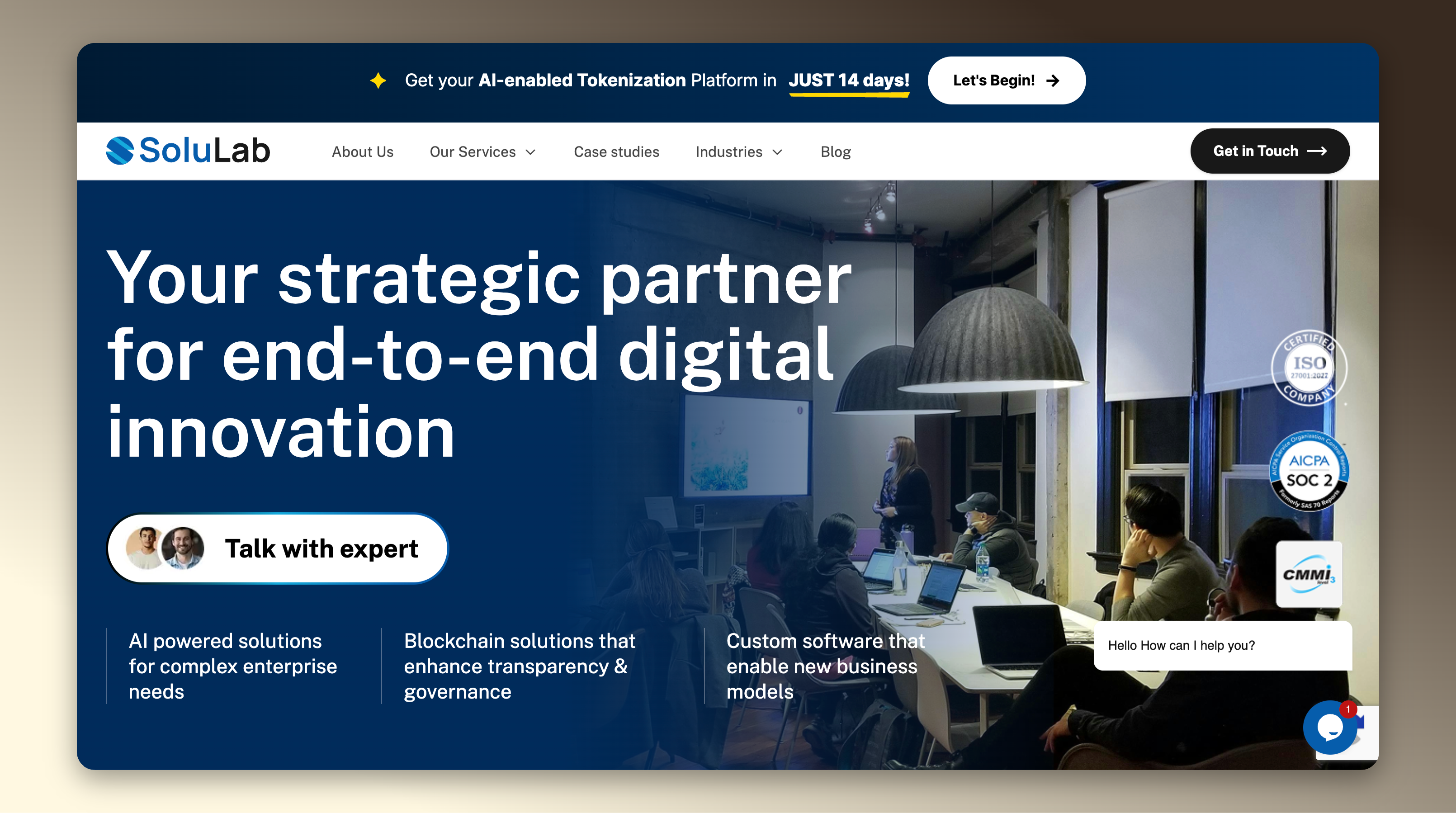
SoluLab integrates OpenClaw agents comprehensively within organizational systems rather than deploying them independently. They connect autonomous agents to CRMs, scheduling platforms, internal databases, and customer-facing applications.
Their background encompasses building NLP and machine learning-powered agents managing customer interactions, personalized recommendations, voice interface control, and system connectivity across travel, healthcare, and logistics sectors. OpenClaw integration extends these capabilities to autonomous action across connected systems.
SoluLab manages the complete implementation lifecycle: needs assessment, architecture planning, construction, validation, and deployment. Organizations requiring OpenClaw agents functioning as integrated system components rather than standalone assistants rely on their integration expertise.
Services: Custom OpenClaw agent development, system integration, full-stack AI construction, enterprise application connectivity
Ideal Client: Mid-market organizations needing agents integrated with existing CRM, ERP, and operational systems
3. Markovate
Website: markovate.com
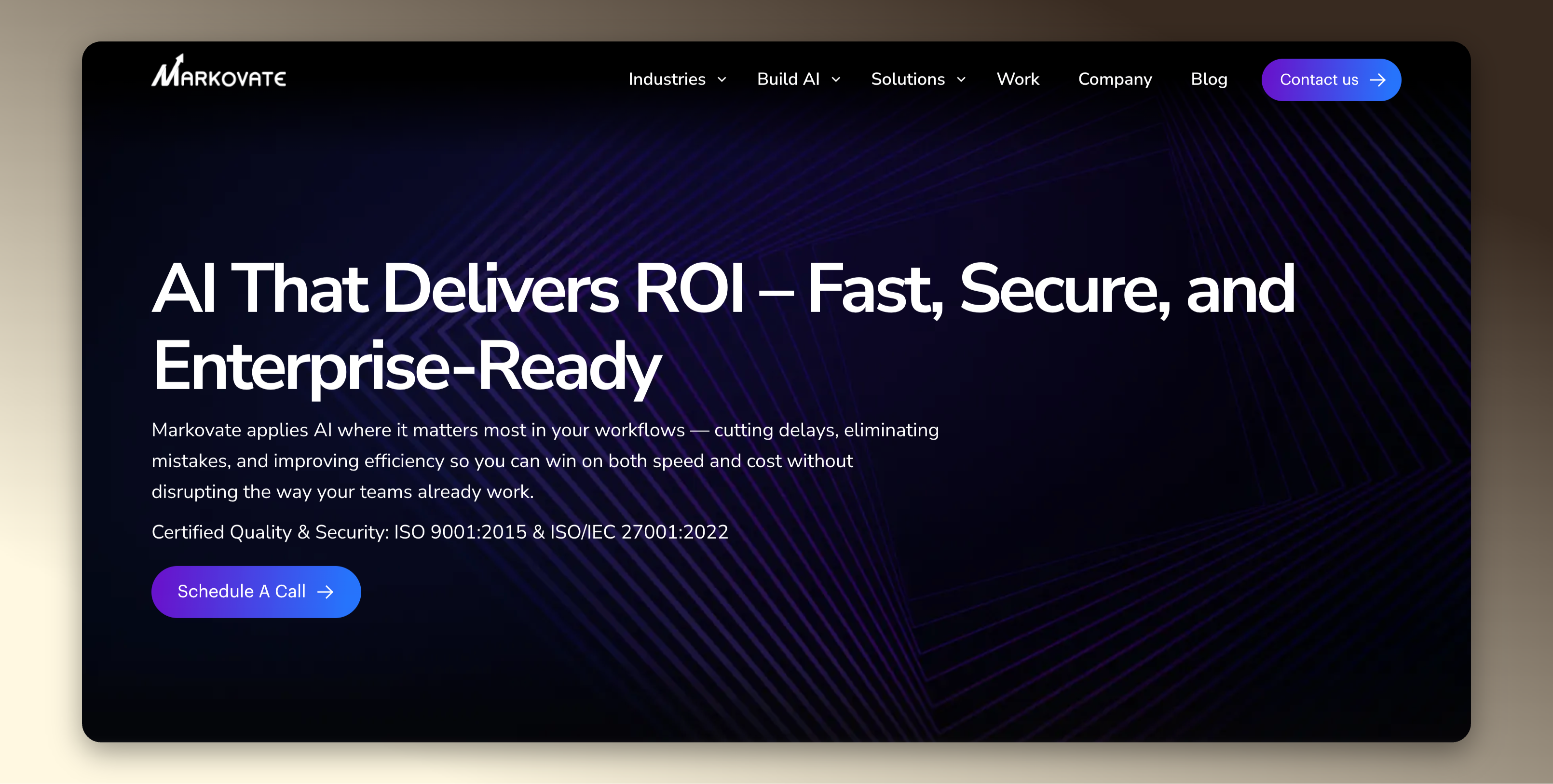
Markovate specializes in controlled, measurable AI implementations minimizing risk. Their philosophy emphasizes testing OpenClaw functionality on isolated, contained workflows before broader organizational rollout. Suitable initial targets include email categorization, automated report generation, customer support triage, and internal knowledge resource management.
Their expertise spans AI dashboards, operational automation agents, and document analysis for SaaS, healthcare, and logistics clients. OpenClaw implementations follow identical patterns: isolate high-frequency, low-complexity workflows; construct agents addressing them; measure outcomes; decide on expansion.
Organizations uncomfortable granting AI agents extensive system access appreciate Markovate’s pilot methodology, which maintains limited risk exposure while validating implementation viability.
Services: Controlled pilot deployments, workflow automation, AI dashboards, process automation agents
Ideal Client: Organizations piloting OpenClaw on specific use cases before scaling
4. 10Clouds
Website: 10clouds.com
10Clouds brings a product-development perspective to OpenClaw integration. Rather than automating existing processes, they embed autonomous agent capabilities directly into customer-facing applications and products.
Their expertise includes ChatGPT and LLM integrations, custom AI solutions, and reusable components delivering agent-like experiences. With OpenClaw specifically, they concentrate on embedding autonomous functionality into existing product architectures while meeting customer-facing security and design standards.
Their strength manifests when deliverables require polished product quality—not merely functioning automation—particularly when agents interact directly with end customers.
Services: OpenClaw product integration, LLM-powered application features, custom AI development, product-centric agent design
Ideal Client: SaaS companies and product teams embedding autonomous capabilities into customer-facing platforms
5. Azumo
Website: azumo.com
Azumo modernizes existing business software by incorporating AI functionality—including OpenClaw agents—into operational systems. They serve organizations with functional platforms wanting to enhance capabilities through intelligent automation features like email categorization, support escalation, operation monitoring, and automated task distribution.
Their approach emphasizes incremental enhancement. Rather than rebuilding technology infrastructure around AI, Azumo identifies specific integration points where OpenClaw agents automate manual processes within existing workflows, enabling faster value realization and reduced organizational disruption.
Azumo’s team supports multiple LLM backends, configuring OpenClaw with the most appropriate model per use case, balancing expenses, performance, and precision.
Services: AI modernization, OpenClaw workflow integration, platform enhancement, model-agnostic agent development
Ideal Client: Organizations with established platforms seeking incremental autonomous AI feature additions
6. Deviniti
Website: deviniti.com
Deviniti specializes in delivering enterprise operational intelligence through AI within Atlassian environments (Jira, Confluence, Bitbucket). Their OpenClaw implementations concentrate on operational automation: ticket categorization agents, AI-powered reporting assistants, and agents recommending workflow refinements using behavioral patterns.
For Atlassian-dependent enterprises, Deviniti’s ability to connect OpenClaw agents to project management, documentation, and DevOps platforms generates immediate, observable impact. Their agents enhance team coordination, prioritization, and execution beyond isolated task completion.
Their specialization narrows applicability. Organizations outside Atlassian ecosystems experience reduced advantage.
Services: OpenClaw deployment within Atlassian infrastructure, ticket triage automation, AI-enabled reporting, workflow optimization
Ideal Client: Enterprise organizations operating Atlassian tools requiring operational automation
Selection Criteria for Implementation Partners
OpenClaw represents the most capable personal automation technology in 2026, and simultaneously the most dangerous without proper safeguards. Implementation partner selection determines whether deployment yields 15+ weekly hours saved or security complications haunting IT departments.
An agency treating OpenClaw deployment as a diagnostic mission—identifying bottlenecks first, constructing hardened agents second, measuring productivity savings throughout—brings operator methodology. For system-wide integration, SoluLab and 10Clouds integrate agents into existing technology. For controlled testing, Markovate constrains scope. For Atlassian-dependent enterprises, Deviniti possesses deep ecosystem knowledge.
Universal principle: professional guidance proves essential. OpenClaw implementation success requires careful execution; inadequate deployment creates liability.
FAQ: OpenClaw Implementation in 2026
What is an OpenClaw implementation agency?
Implementation agencies deploy and secure OpenClaw autonomous agents within organizations. They configure permissions, establish sandbox environments, integrate language models, and design workflows ensuring safe and productive automation.
Why does OpenClaw present security concerns without professional deployment?
OpenClaw operates locally with machine access capabilities, executing shell commands, controlling browsers, managing email, and manipulating files autonomously. Without environmental isolation, permission constraints, and system oversight, this autonomy creates substantial security exposure.
What are typical OpenClaw implementation expenses?
- Single workflow pilots: $15,000–$60,000
- Integrated system deployments: $50,000–$200,000
- Enterprise-scale implementations: $250,000+
Costs depend on security architecture, system integration requirements, and governance complexity.
What implementation timeline should organizations expect?
- Single workflow pilots: 3–6 weeks
- Department-level implementations: 2–3 months
- Enterprise deployments: 4–9 months
Security validation and sandbox configuration typically influence schedules.
Which organizations should avoid internal OpenClaw deployment?
Companies lacking:
- Security engineering expertise
- Sandbox infrastructure capability
- Credential isolation protocols
- Governance procedures
OpenClaw demands controlled implementation; inexperienced deployment creates risks.