Kimmo Hakonen
Chief Innovation Officer
Insights, strategies, and real-world playbooks on AI-powered marketing.
MAR 13, 2026
How to Optimize Content for Perplexity AI: A Step-by-Step Guide

Perplexity AI processes over 630 million searches per month and is growing at roughly 40% month over month. Unlike traditional search engines that send users to your website, Perplexity synthesizes answers directly from web sources and cites them inline. If your content gets cited, you get qualified referral traffic from users who already understand what you do. If it doesn’t, you’re invisible in a channel that’s rapidly becoming how buyers and decision-makers discover products and agencies.
For marketing agencies and AI-focused content teams, optimizing for Perplexity isn’t optional in 2026 – it’s a core part of AI marketing operations. This guide covers what Perplexity looks for when selecting sources, how to structure your content for citation, and the specific tactics – including answer engine optimization (AEO) – that increase your chances of appearing in AI-generated answers.
What this guide covers: How Perplexity selects sources, the difference between AEO and SEO, structural and content tactics, freshness requirements, schema markup, measurement, and a full publication checklist.
How Perplexity Selects Sources to Cite
Perplexity’s citation engine prioritizes three primary signals. Understanding them is the foundation of optimizing content for Perplexity AI.
Signal 1: Recency

Recency is Perplexity’s strongest citation signal. Content published or substantially updated within the last six months gets cited three to four times more frequently than older material. Content over a year old is significantly disadvantaged unless it’s a foundational reference that nothing else replaces. This isn’t a minor factor – it’s the fastest way to lose Perplexity visibility on pages that were once performing well.
Content updated within the last 6 months is cited 3–4x more frequently than older material. This is Perplexity’s most underrated ranking signal.
Signal 2: Answer Specificity
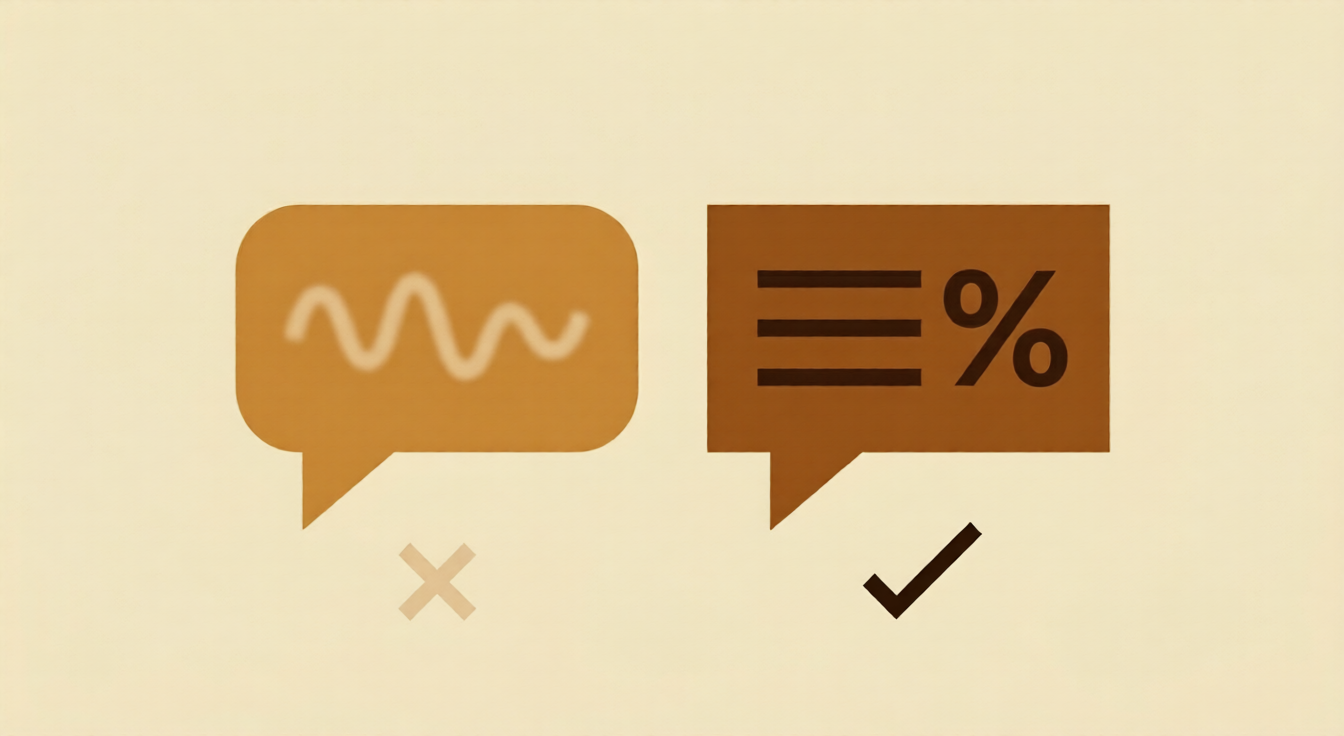
Perplexity evaluates whether content directly answers the query with specific, factual information. Vague overviews don’t get cited. Concrete, data-backed answers do. ‘Perplexity processes over 630 million monthly searches’ is citable. ‘Perplexity is growing fast’ is not. The more specific your claims – numbers, percentages, named tools, timelines – the more likely an AI will pull them as source material.
Signal 3: Structural Clarity
Perplexity processes content differently than human readers. It looks for clear structural signals that indicate where specific answers live within a page. Descriptive headers, answer-first paragraphs, and well-structured sections dramatically increase the likelihood of being cited for a relevant query. This is the core principle behind answer engine optimization – structuring content so an AI can extract it cleanly and attribute it accurately.
Weak vs. Strong Citation Signals: Examples
| Citation Signal | Weak Version (Less Likely to Be Cited) | Strong Version (More Likely to Be Cited) |
|---|---|---|
| Recency | ’AI is growing fast' | 'Perplexity processes 630M+ monthly searches, growing ~40% MoM’ |
| Specificity | ’Many businesses use AI for content' | 'Companies using AI content engines report 60–80% reduction in production time per piece’ |
| Structure | Long paragraphs, buried answers | Answer in first 1–2 sentences after each H2/H3 |
| Schema | No structured data | FAQ schema, Article schema, HowTo schema with dateModified |
| Header format | ’Source Selection' | 'How Perplexity Selects Sources to Cite’ |
| Data points | ’Perplexity is popular' | 'Perplexity cited 3–4x more frequently for content updated within 6 months’ |
Answer Engine Optimization vs. Traditional SEO: What’s Different
Answer engine optimization (AEO) and traditional SEO are not opposites – they’re complementary. Content that ranks well on Google tends to perform well in Perplexity too, because the foundational principles overlap: relevant content, clear structure, authoritative sources, and direct answers to user questions.
The differences are in emphasis. Traditional SEO rewards keyword density, backlink profiles, and technical signals. AEO rewards answer specificity, structural clarity, and freshness. If you’re already doing solid SEO for your AI marketing operations content, you’re most of the way there. The incremental work is in restructuring your content to lead with direct answers and updating it more frequently.
AEO vs. Traditional SEO: Signal Comparison
| Signal | Traditional SEO | Answer Engine Optimization (AEO) |
|---|---|---|
| Keywords | Density, placement, semantic relevance | Query match, natural language, question phrasing |
| Structure | Title tags, meta, H-tags, URL | Answer-first paragraphs, descriptive H2/H3, FAQ schema |
| Authority | Domain authority, backlink profile | Specificity, citations, data-backed claims |
| Freshness | Moderate signal – older pages can still rank | Strong signal – content >6 months loses citation frequency by 3–4x |
| Length | Longer content often outranks shorter | Concise, extractable answers outperform exhaustive articles |
| Measurement | Rankings, impressions, CTR (Search Console) | Perplexity referral traffic (GA4), manual citation checks |
| Update cadence | Annually or when rankings drop | Quarterly minimum for high-value pages |
How to Structure Content for Perplexity Citation
Structure is where most Perplexity optimization gains come from for teams already producing quality content. These four structural changes have the highest impact on citation frequency.
1. Use Descriptive, Query-Matching H2 and H3 Headers
Each subheading should read like a question or a direct topic statement that mirrors how users phrase queries. ‘How Perplexity Selects Sources to Cite’ is more useful to an AI parser than ‘Source Selection.’ The header tells Perplexity exactly what information follows – and when a user queries that topic, your section is the match.
For marketing content specifically, this means headers like:
- ‘How to use AI for marketing agency content production’ (not ‘Content production’)
- ‘What is an AI content engine and how does it work?’ (not ‘AI content tools’)
- ‘How to automate marketing reporting with AI’ (not ‘Reporting automation’)
2. Lead Each Section with the Direct Answer

Put your most direct, factual statement in the first one or two sentences after each heading. Follow it with context, examples, and nuance. This ‘answer-first’ structure mirrors how Perplexity extracts and cites information – it pulls from the top of sections, not the bottom. If your key claim is buried in paragraph three, Perplexity may cite a competitor who said the same thing first.
Common mistake: Starting sections with context or preamble before the answer. Perplexity extracts from the top of sections. Your first sentence after each heading should be your strongest, most citable claim.
3. Include Specific Data, Named Tools, and Concrete Examples
Wherever possible, include numbers, percentages, named tools, timelines, and concrete examples. For AI content marketing specifically: ‘Companies using AI content engines report 60–80% reduction in production time per piece’ is citable. ‘AI speeds up content production’ is not. The specificity of your claims is directly proportional to your citation likelihood.
For marketing and agency content, data points to include:
- Time savings from specific automations (e.g., ‘8–15 hours per week recovered on lead qualification’)
- Named tools with version or year context (e.g., ‘Make.com, Zapier, n8n for workflow automation in 2026’)
- Specific percentages from deployments or industry reports
- Named companies or case examples where possible
4. Format for Extractability
Perplexity extracts content more reliably from well-formatted pages. Use bullet points for lists, numbered steps for processes, and tables for comparisons. Keep paragraphs to 3–4 sentences maximum in sections you want cited. Long, dense paragraphs get skipped in favor of structured content that’s easier to parse and attribute.
Freshness: The Most Underrated Perplexity Optimization Signal
Perplexity has a strong recency bias. Content six months old starts losing citation frequency. Content over a year old is significantly disadvantaged. For AI marketing tools, agency content, and anything in a fast-moving category, this means your content calendar needs a freshness strategy – not just a publication strategy.
How to Maintain Content Freshness for Perplexity
- Set a quarterly review cycle for your highest-value pages. Don’t just publish and forget.
- Update statistics and data points – even minor data updates trigger a recency signal reset.
- Add new examples and case studies – especially useful for AI marketing content where tools and pricing change frequently.
- Refresh tool and platform references – outdated tool versions signal stale content to Perplexity crawlers.
- Update the dateModified in your Article schema – Perplexity reads structured data dates as a freshness signal.
- Add a ‘Last Updated’ label visibly on the page – this signals recency to both Perplexity and human readers.
For AI marketing operations and agency content, quarterly updates are the minimum. In fast-moving categories, monthly light refreshes on your highest-traffic articles maintain citation frequency more reliably than annual rewrites.
Schema Markup for Perplexity and AEO
Structured data gives Perplexity explicit signals about your content’s type, topic, and recency. These three schema types have the highest impact on Perplexity citation for marketing and agency content.
FAQ Schema
FAQ schema marks up question-and-answer pairs, making them directly extractable by AI answer engines. Every article targeting an informational query should have FAQ schema implemented with the specific questions your target audience searches. This is also the foundation of answer engine optimization – marking up your best answers so AI engines know exactly where they live.
Article Schema with dateModified
Article schema with a populated dateModified property tells Perplexity exactly when your content was last updated. Without it, Perplexity estimates recency from crawl data alone, which is less reliable. Always populate both datePublished and dateModified, and update dateModified every time you make meaningful content changes.
HowTo Schema
For step-by-step guides – like this one – HowTo schema marks up each step explicitly. Perplexity frequently extracts HowTo content for procedural queries (‘how to optimize content for Perplexity,’ ‘how to set up an AI content calendar automation workflow’). Each step should include a name and description that stands alone as a usable instruction.
How to Measure Your Perplexity Optimization Performance
Perplexity referral traffic shows up in Google Analytics 4 as referrals from perplexity.ai. Set up a custom segment or exploration to track these visitors separately from organic search. Monitor which pages receive the most Perplexity traffic, what queries are driving it (when visible in referral parameters), and how Perplexity visitors behave compared to organic search traffic – bounce rate, session duration, conversion rate.
Manual Citation Checking
Run your target queries in Perplexity monthly and check whether your content appears in the citations. Do this for:
- Your primary target keywords (e.g., ‘how to optimize content for Perplexity AI’)
- AI marketing operations queries relevant to your service offering
- Competitor-comparison queries where you want to appear
- High-intent commercial queries your ICP searches
Track results in a simple log: date, query, whether you were cited, which page, and the position in the citation list. This becomes your AEO performance baseline – and shows you exactly which content gaps need to be filled.
Using AI to Scale AEO Content Production
For marketing agencies producing content at volume, an AI content engine can systematically apply AEO best practices across your content library. This means automating: answer-first paragraph restructuring, FAQ generation for schema markup, freshness update briefs for quarterly reviews, and AI content calendar automation that schedules freshness updates alongside new publication.
Perplexity Optimization Checklist: Before Every Publication
Every article you publish targeting Perplexity AI visibility should pass these checks before going live – and every quarterly refresh should use the same list.
Full AEO / Perplexity Optimization Checklist
| Optimization Checklist Item | Category | Priority |
|---|---|---|
| Title includes the primary query or target question | Structure | Required |
| Each H2/H3 reads as a clear, extractable subtopic | Structure | Required |
| Every section leads with its most specific claim | Content | Required |
| Concrete data points and named tools throughout | Content | Required |
| Content updated within the last 6 months | Freshness | Required |
| Publish and update dates visible on page | Freshness | Required |
| FAQ schema implemented with target questions | Schema | High |
| Article schema with dateModified populated | Schema | High |
| HowTo schema for step-by-step content | Schema | High |
| Perplexity referral tracking set up in GA4 | Measurement | High |
| Monthly manual citation check for target keywords | Measurement | High |
| Quarterly review cycle scheduled for key articles | Process | High |
| No unsubstantiated claims – all data has a source | Content | Medium |
| Internal links to related content with keyword anchors | SEO | Medium |
Bottom line: If you apply these practices consistently, you’re building a content library that performs across both traditional SEO and AI search channels. In 2026, that dual optimization is increasingly where content-driven growth compounds – and where marketing agencies that move early create a citation moat competitors can’t easily replicate.
FAQ: Optimizing Content for Perplexity AI
How do I get my content cited in Perplexity AI?
To get cited in Perplexity AI, your content needs three things: recency (updated within the last 6 months), answer specificity (concrete data, named tools, specific numbers – not vague overviews), and structural clarity (descriptive H2/H3 headers, answer-first paragraphs, FAQ and Article schema). Content that directly answers the user’s query with a specific, factual claim in the first sentence after each heading is significantly more likely to be cited than content where the answer is buried in paragraphs.
What is answer engine optimization (AEO)?
Answer engine optimization (AEO) is the practice of structuring and updating content specifically to be cited by AI answer engines like Perplexity, ChatGPT search, and Google’s AI Overviews. Unlike traditional SEO, which focuses on keyword density and backlinks, AEO prioritizes answer specificity, structural clarity, freshness, and schema markup. The goal is to make your content the extractable source an AI uses when synthesizing an answer – generating direct referral traffic and authority signals in AI-mediated discovery.
How is AEO different from traditional SEO?
Traditional SEO rewards keyword placement, backlink profiles, and technical signals. AEO rewards answer specificity, structural clarity, and content freshness. The key practical differences: AEO requires content updated at least quarterly (vs. annually for SEO), leads with direct answers rather than context-first paragraphs, uses descriptive H2/H3 headers that mirror query phrasing, and requires FAQ and Article schema as baseline requirements. The two approaches are complementary – good SEO content is the foundation, AEO restructuring is the incremental work.
How often should I update content to rank in Perplexity?
For Perplexity AI visibility, the minimum update frequency for high-value pages is quarterly. Content updated within the last six months is cited three to four times more frequently than older material – this is Perplexity’s strongest ranking signal after answer specificity. For fast-moving categories (AI tools, marketing automation, agency services), monthly light refreshes on your highest-traffic articles maintain citation frequency more reliably than less frequent comprehensive rewrites.
What schema markup helps Perplexity cite my content?
The three highest-impact schema types for Perplexity optimization are:
- FAQ schema – marks question-answer pairs as directly extractable by AI engines
- Article schema with dateModified – tells Perplexity exactly when content was last updated (critical for the recency signal)
- HowTo schema – marks step-by-step processes for procedural queries
All three should be implemented before publication, not added retroactively.
How do I measure whether my content is being cited in Perplexity?
Perplexity referral traffic appears in GA4 as referrals from perplexity.ai. Set up a custom segment to track these visitors separately from organic search. Additionally, run manual citation checks monthly: query your target keywords in Perplexity and note whether your content appears in the citations, which page, and at what position. Track these in a simple log to build your AEO performance baseline and identify which content gaps need to be addressed.
Can AI tools help with AEO content optimization?
Yes. An AI content engine can systematically apply AEO best practices at scale: restructuring paragraphs to lead with answers, generating FAQ content for schema markup, producing quarterly freshness update briefs, and maintaining an AI content calendar automation workflow that schedules both new publications and freshness updates. For marketing agencies managing large content libraries, this is how AEO optimization gets applied consistently across dozens of articles rather than one at a time.
Does Perplexity use the same signals as Google for ranking?
Perplexity and Google share some foundational signals – relevant content, clear structure, authoritative sources. But Perplexity places significantly more weight on answer specificity and recency, and less weight on backlinks and keyword density. The practical implication: a high-DA page with vague, outdated content will often be outperformed in Perplexity by a lower-DA page with specific, recently updated answers structured for extraction. Both signals matter, but the weighting is different enough to require a distinct AEO optimization layer on top of your existing SEO content strategy.