Luka Mrkić
Head of BD
Insights, strategies, and real-world playbooks on AI-powered marketing.
MAR 12, 2026
How to Get Started with AI Automation
Most companies beginning with AI automation share a common challenge: they understand its importance but don’t know where to start. The gap between “we should use AI” and “here’s what we automated this quarter” is where most teams get stuck.
Why Most AI Automation Projects Stall Before They Start
Teams often approach AI as a technology selection problem rather than an operational one. The critical question isn’t which tool to choose, but “which process costs us the most time and produces inconsistent results?” This reframing prevents projects from dying in backlogs due to indecision.
Step 1: Identify Your Highest-Pain, Lowest-Risk Processes
List all repetitive team processes and score them on two axes: time consumption (hours weekly) and mistake consequences. The optimal starting point combines high time cost with low risk. For most marketing and SaaS companies, this includes content repurposing, email follow-ups, and internal reporting.
The framework prioritizes processes like “content repurposing (blog to social/email)” and “email follow-up drafting” as starting points, while deferring higher-risk tasks like contract handling to later phases.
Step 2: Map the Current Workflow Before You Automate It
Understanding existing processes prevents failures. Document each step by identifying who performs it, what inputs are needed, where outputs go, what constitutes success, and which steps require human judgment versus mechanical execution.
Step 3: Choose the Right Automation Layer
Three distinct layers exist:
Prompt-Based Automation uses AI interfaces directly for discrete tasks like drafting and summarizing—no coding required, fastest setup.
Workflow Automation connects AI to existing tools, qualifying leads and updating records across platforms via tools like Make or Zapier.
Custom AI Agents handle multi-step tasks semi-autonomously, researching prospects and managing content pipelines—highest ROI ceiling but requiring more development.
Step 4: Start Small, Measure Everything, Then Expand
Run automated and manual versions in parallel for two weeks. Track hours saved weekly, error rates, and team adoption. Typical outcomes for 11–150 employee companies include recovering 15–25 weekly hours—equivalent to one full-time hire.
Step 5: Build the Infrastructure for Scale
After several stable automations, establish modular blocks for triggers, data sources, processing, quality checks, and outputs. Create governance around automation ownership, edge case handling, model updates, and team onboarding.
Common Mistakes That Kill AI Automation Projects
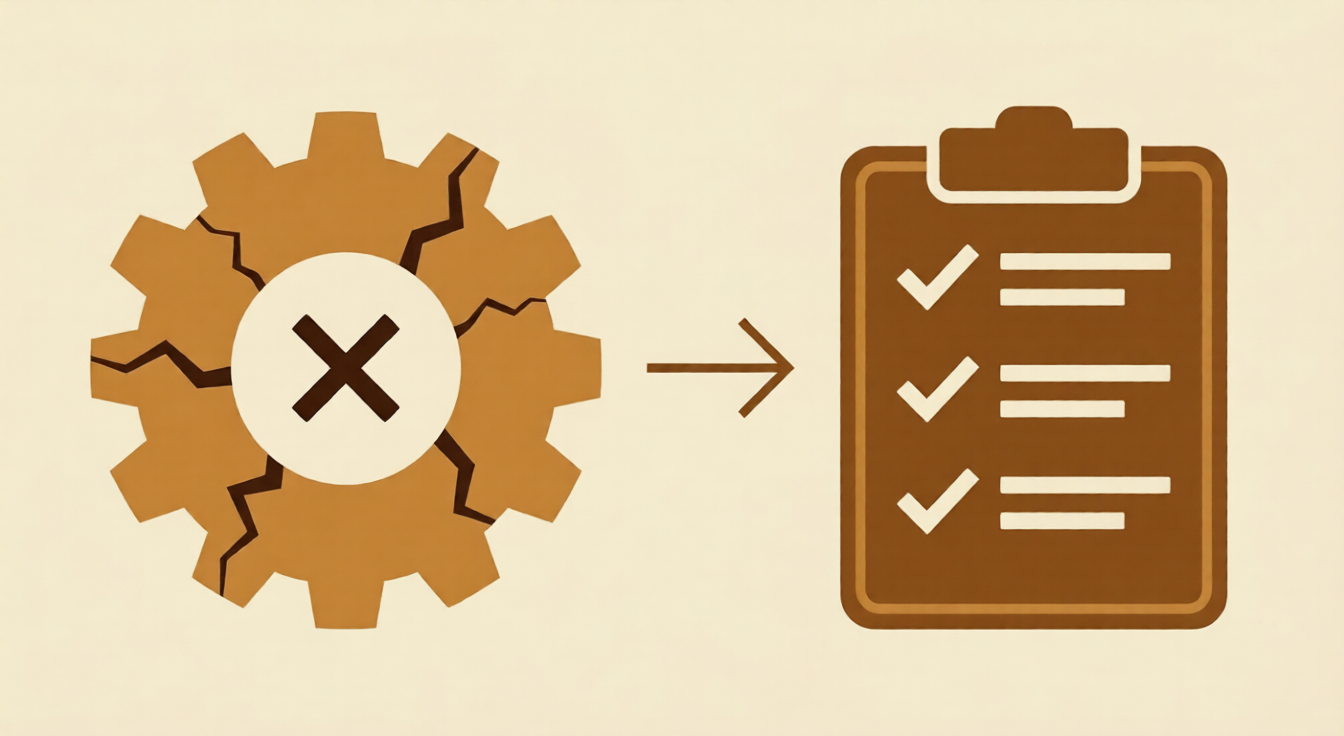
- Automating broken processes without first fixing them
- Attempting everything simultaneously rather than sequential implementation
- Tool selection before workflow mapping
- Skipping measurement and ROI documentation
- Deploying without governance structures
- Ignoring team adoption barriers
What to Automate First: By Company Type
Marketing Agencies should prioritize content repurposing, calendar automation, client reporting, and lead qualification.
SaaS Companies benefit most from automating onboarding sequences, CRM enrichment, lead generation agents, and ticket triage.
Service Companies should focus on document summarization, automated reporting, proposal drafting, and business development research.
FAQ: Getting Started with AI Automation
How do I get started with AI automation?
Getting started requires identifying the most painful, lowest-risk process, documenting it completely, choosing an appropriate automation layer, implementing one process, measuring results for two weeks, then expanding.
What should marketing agencies automate first?
Marketing agencies typically see the highest ROI from content repurposing and automated reporting first. These processes are high-frequency, low-risk, and produce measurable time savings within the first two weeks.
How long does AI automation take to implement?
Implementation timelines range from hours for prompt-based automation to eight weeks for custom agents. Most teams see their first measurable results within two weeks of deploying a single focused automation.
What does AI automation cost?
Costs vary by complexity. Prompt-based automations are essentially free beyond the AI subscription. Workflow automations using tools like Make or Zapier cost tens of dollars monthly. Custom AI agents involve development investment but typically pay back within the first month through recovered team hours.
How do I measure AI automation ROI?
Track three metrics: hours saved weekly, output quality versus manual work, and team adoption rates. For 11–150 employee companies, recovering 15–25 weekly hours is a common baseline—equivalent to the value of one full-time hire.