Kimmo Hakonen
Chief Innovation Officer
Insights, strategies, and real-world playbooks on AI-powered marketing.
JUN 29, 2026
Sales Workflow Automation: How to Remove Manual Work Without Breaking the Customer Journey
Sales reps spend only 28% of their week on actual selling. The other 72% disappears into CRM data entry, follow-up scheduling, prospect research, and pipeline reports that no one reads until Friday (Salesforce State of Sales, 2024). That’s not a productivity problem — it’s a structural one.
Most teams respond by buying another tool: another sequence for the inbox, another integration for the CRM. Somehow the admin pile grows taller, not shorter.
This guide maps which manual tasks are safe to automate, which tools handle each one, and, critically, which moments in the buyer journey you should never automate. Because the gap between automation that scales revenue and automation that breaks trust comes down to knowing exactly where the ceiling is.
Key Takeaways
- Sales reps spend only 28% of their week selling; the average rep loses nearly 2 full working days per week to admin tasks alone (Salesforce, 2024; Forrester Activity Study, 2024).
- The automation ceiling defines 3 B2B moments that must stay human: discovery calls, proposals, and post-close onboarding.
- Signal-triggered automation outperforms time-triggered sequences — fire when buyers act, not on day 3 of a generic schedule.
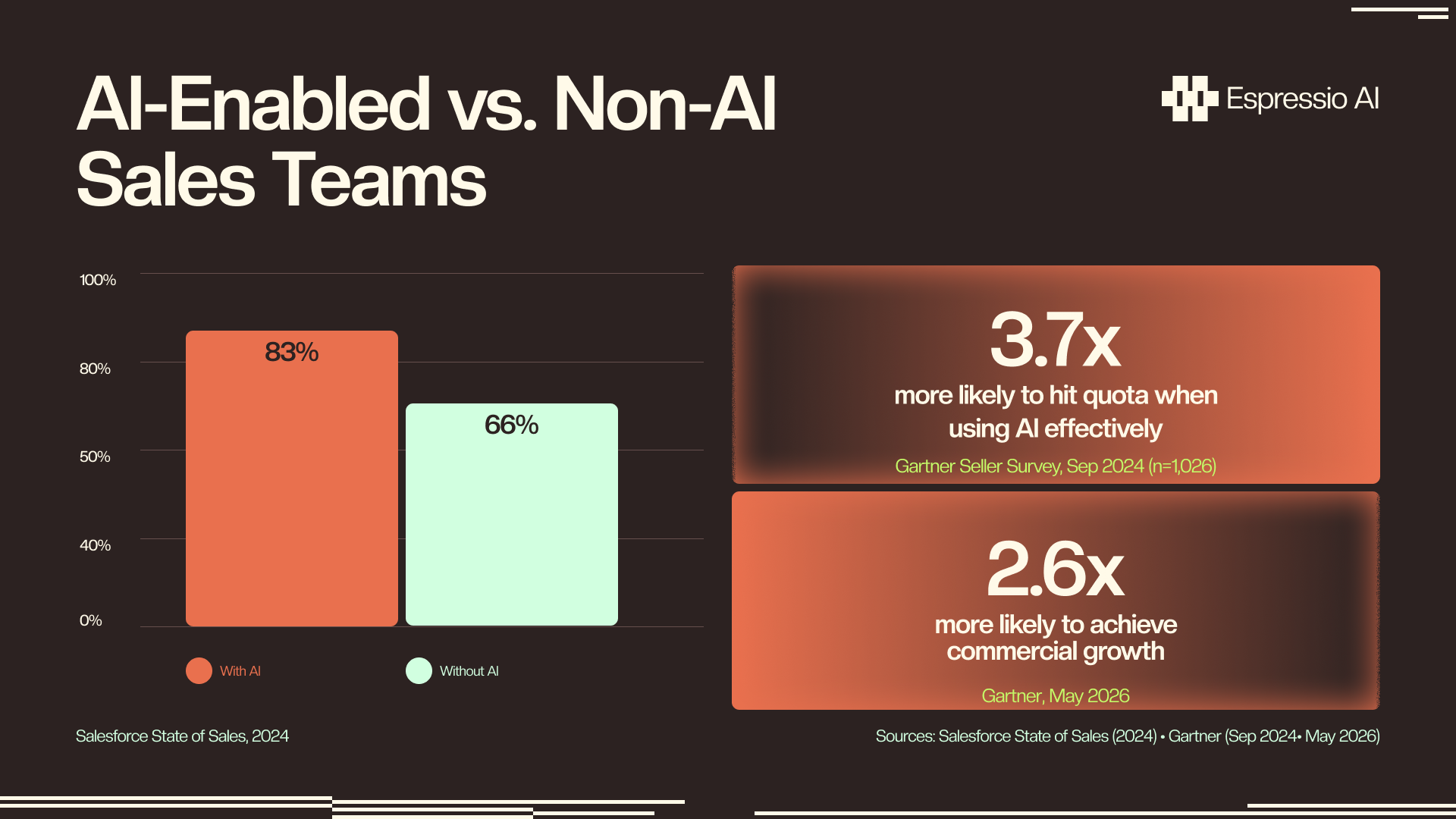
- 83% of AI-enabled sales teams reported revenue growth vs. 66% of non-AI teams (Salesforce, 2024).
- Growth-stage teams running signal-first systems are achieving the output of a 5-person team with one RevOps operator.
Why Sales Teams Still Waste 72% of Their Time (And Why Automation Alone Won’t Fix It)
Sales reps spend only 28% of the work week on actual selling activities, while the average rep loses nearly two full working days per week to administrative tasks alone, according to Salesforce’s 6th State of Sales report and the Forrester Activity Study of 3,031 sales professionals. In a 40-hour week, that’s 28 hours not spent on what actually moves deals forward.
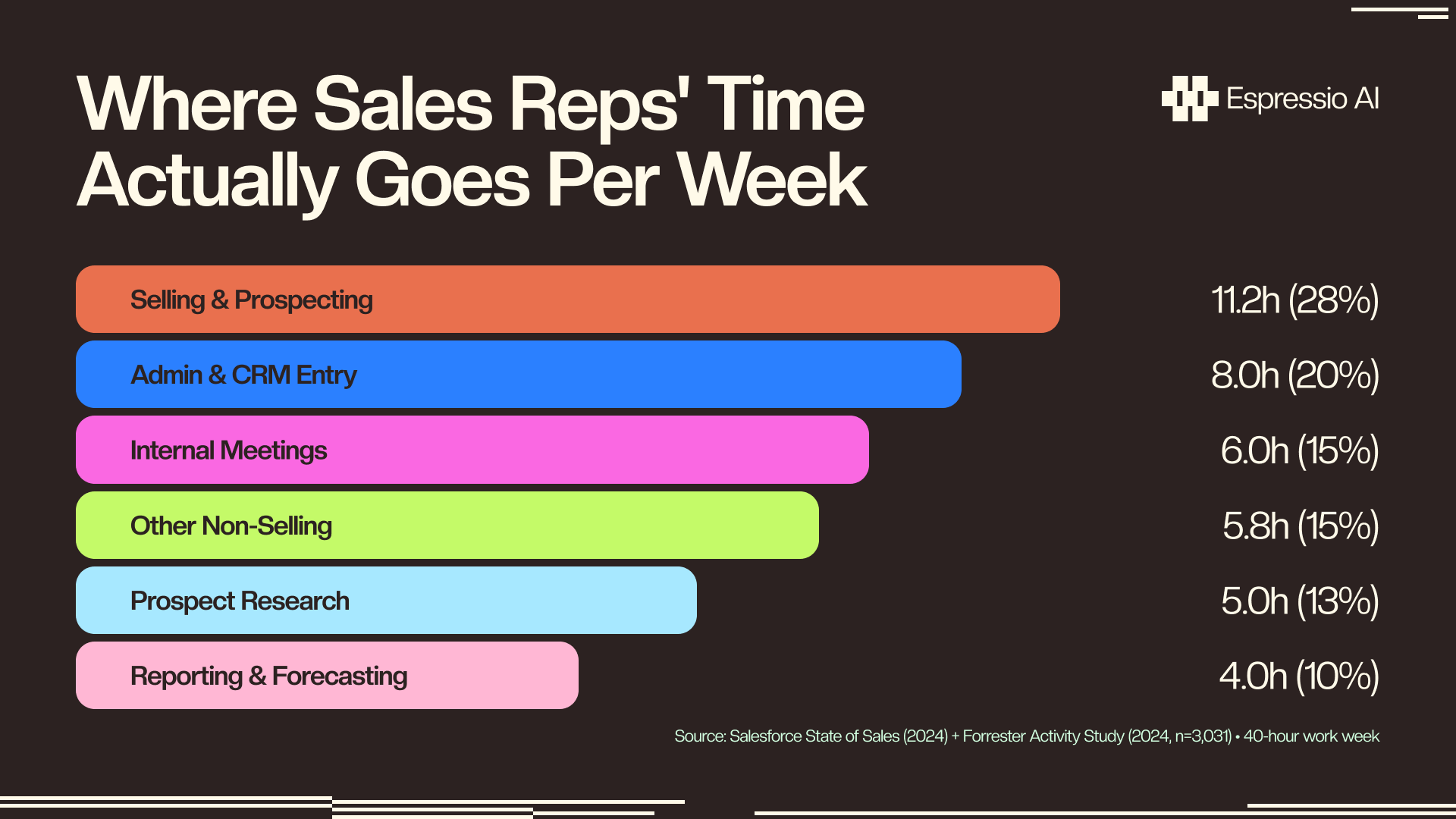
Those 28 hours break down like this:
- Admin and CRM entry: manually logging calls, updating deal stages, correcting contact records that enrichment tools could update automatically
- Internal meetings: pipeline reviews, forecast calls, SDR-to-AE handoffs that happen in real time instead of asynchronously
- Prospect research: manually pulling LinkedIn profiles, company news, and funding history before every call
- Reporting: building weekly pipeline snapshots and formatting data for managers who asked for the same report last week
Why can’t teams just automate their way out of this? Usually because they skip the mapping step. Automation accelerates whatever process you already have, broken or healthy. Before touching any workflow tool, map the process manually: find every step, separate those requiring judgment from those that don’t, then automate the latter.
Our take: The growth teams getting automation right in 2026 aren’t buying more tools — they’re doing less with fewer tools, but more precisely. A single well-configured workflow that scores leads and routes them instantly is worth more than six disconnected sequences firing on a calendar.
Citation capsule: Sales reps spend only 28% of the work week on actual selling, while the average rep loses nearly two full working days per week to administrative tasks alone, per Salesforce’s 6th State of Sales report and the Forrester Activity Study of 3,031 sales professionals. Automation’s job isn’t to add more activity — it’s to reclaim the 72%.
The 5 Sales Tasks You Should Automate First
Over 90% of RevOps teams now use some form of automation, and nearly 70% combine AI and automation together, according to a Zapier State of RevOps Automation survey. The question isn’t whether to automate — it’s which tasks to start with. The five below share three traits: high time cost, low judgment requirement, and clear ROI.
1. Lead qualification and scoring
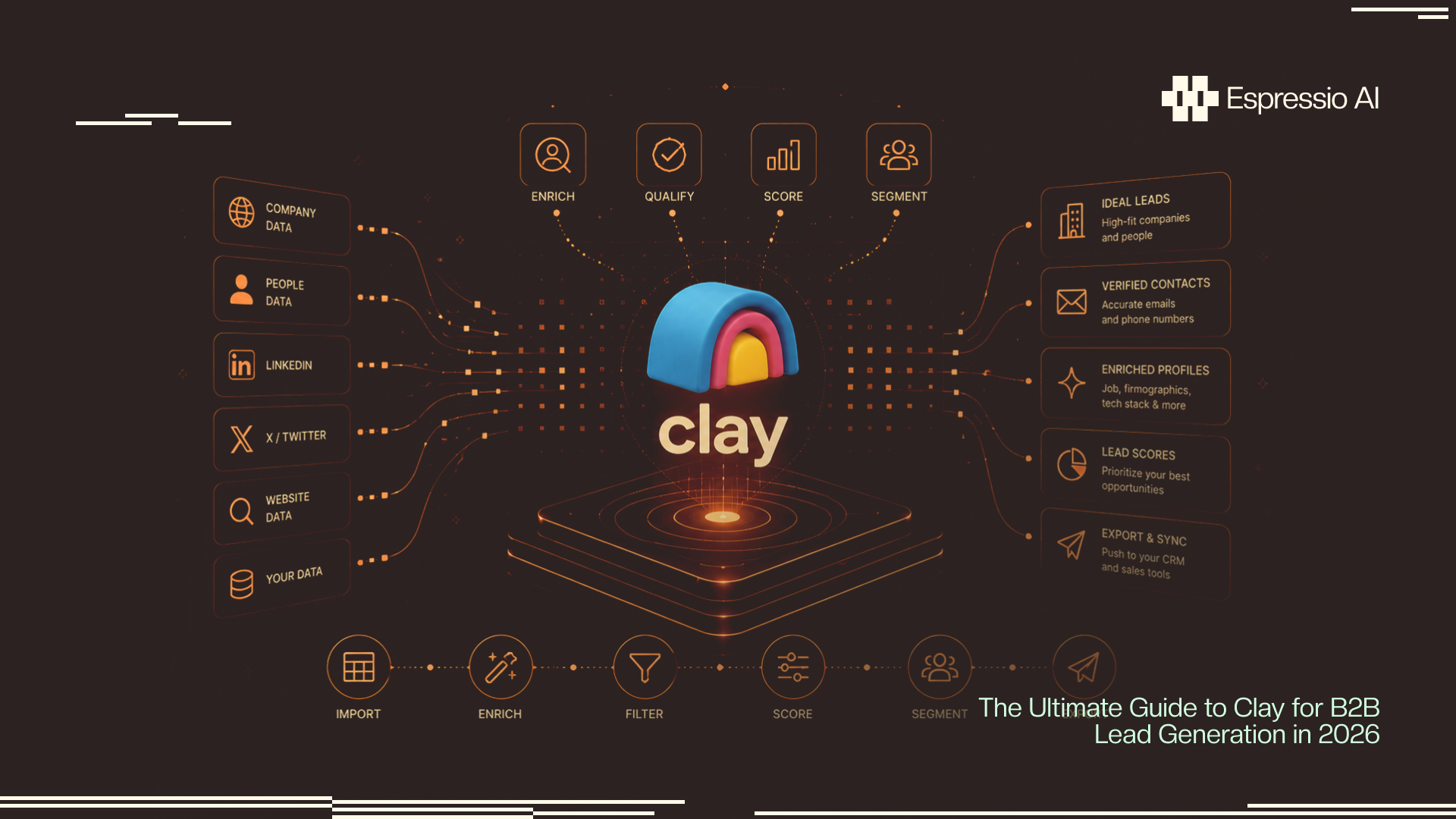
Incoming leads carry signals that indicate ICP fit: company size, industry, job title, tech stack, and intent data. Scoring these manually takes 10–15 minutes per lead. An automated scoring model connected to your CRM does it in seconds. Tools like Apollo.io, Clay, or a custom in n8n handle this without human input, routing Tier 1 leads directly to reps while lower-tier leads enter nurture.
2. CRM data entry and contact enrichment
Every rep who manually types a company name, domain, and LinkedIn URL into a CRM field is spending time a tool can handle. Clearbit, Apollo, or Hunter.io enrich records automatically on creation. Paired with call-recording transcription (Fathom, Fireflies), you can log call summaries to CRM fields without a rep touching the keyboard after a call.
3. Follow-up sequencing (signal-triggered, not time-triggered)
Time-triggered sequences are the old model: “send on day 3, follow up on day 7” treats all buyers as identical. Signal-triggered sequences fire when a buyer acts — revisiting your pricing page, opening a proposal, engaging with a case study. What arrives ten minutes after a real signal feels relevant. What shows up on day 7 because the calendar says so feels like noise.
4. Meeting scheduling and pre-call research briefs
Calendly, Cal.com, or Chili Piper handle inbound meeting booking without a back-and-forth email chain. Pre-call briefs (a summary of the prospect’s recent activity, company news, and open deal context) can be generated automatically and dropped into the rep’s inbox 30 minutes before a call. Reps show up prepared without spending 20 minutes researching.
5. Weekly reporting and pipeline summaries
Pipeline reports are valuable. Building them manually is not. A scheduled workflow that pulls CRM data, formats the key metrics, and sends a Slack or email summary each Friday reclaims 1–2 hours per rep per week with zero accuracy trade-off — and eliminates the “can you pull me a report?” request entirely.
Citation capsule: Over 90% of RevOps teams now use automation tools, and nearly 70% pair AI with automation, per Zapier’s State of RevOps Automation survey. Lead qualification, CRM enrichment, signal-triggered follow-up, meeting scheduling, and pipeline reporting are the five highest-ROI starting points — high volume, low judgment, directly measurable in hours reclaimed per week.
The 3 Moments You Must Never Automate (The Automation Ceiling)
By 2030, 75% of B2B buyers will prefer sales experiences that prioritize human interaction over AI, according to Gartner’s August 2025 research. That’s a data point every automation vendor is quietly ignoring. We’re not.
The automation ceiling isn’t a limitation; it’s a design choice. Teams winning in 2026 use it to free humans for the moments that actually move deals forward.
Three moments should always stay human:
1. The discovery call
No amount of qualification data replaces a real conversation. Discovery calls surface pain the CRM doesn’t capture: budget politics, internal champions, competing priorities, the real timeline versus the stated one. You can automate the scheduling, the pre-call research brief, even the post-call notes. The conversation itself stays human.
2. The proposal moment
Generic proposals close at a fraction of the rate of personalized ones. A winning proposal reflects what you learned in discovery — the buyer’s specific pain, their language, their definition of success. You can automate the template population and pricing calculations. The strategic framing (the narrative connecting their problem to your solution) requires judgment that automation doesn’t have.
From building this internally: At Espressio AI, we run our own RevenueOS and haven’t broken this rule once. Automated formatting, data population, case study selection — yes. Strategic positioning and deal-specific narrative — always human. The proposals that win are the ones where a person made choices about what to include and what to leave out.
3. Post-close onboarding
The first 30 days after a deal closes are when client relationships either form or fracture. Automate the logistics: contract delivery, welcome email sequence, kickoff scheduling, and access provisioning. But the first conversation, where you set expectations and establish working rhythm, stays human. Clients who feel handed to a system in week one churn faster.
Sales organizations that provide AI-enabled next best actions are 2.6x more likely to achieve commercial growth (Gartner, May 2026). Notice the framing: next best actions — AI surfaces what to do, humans act on it.
If you want us to build this for your team, let’s chat.
Citation capsule: By 2030, 75% of B2B buyers will prefer sales experiences that prioritize human interaction over AI, per Gartner’s August 2025 research. The automation ceiling (the three B2B moments that must stay human: discovery, proposal, post-close onboarding) isn’t a constraint. It’s a design principle. Automation that protects these moments creates trust; automation that replaces them destroys it.
How to Build a Signal-First Sales Automation Stack
The industry has taught time-triggered automation for a decade: send on day 3, follow up on day 7, drop a LinkedIn message on day 10. This model treats every buyer as identical and every point in time as equally relevant. Neither is true.
Signal-triggered automation fires on buyer behavior, not on a calendar. A prospect revisiting your pricing page is a signal worth acting on. So is their company announcing a funding round, or a competitor showing up in their industry conversations. A follow-up arriving within minutes of any of those feels relevant. One arriving on day 7 because the calendar says so feels like noise.
The stack has three layers, each dependent on the one before:
Signal sources
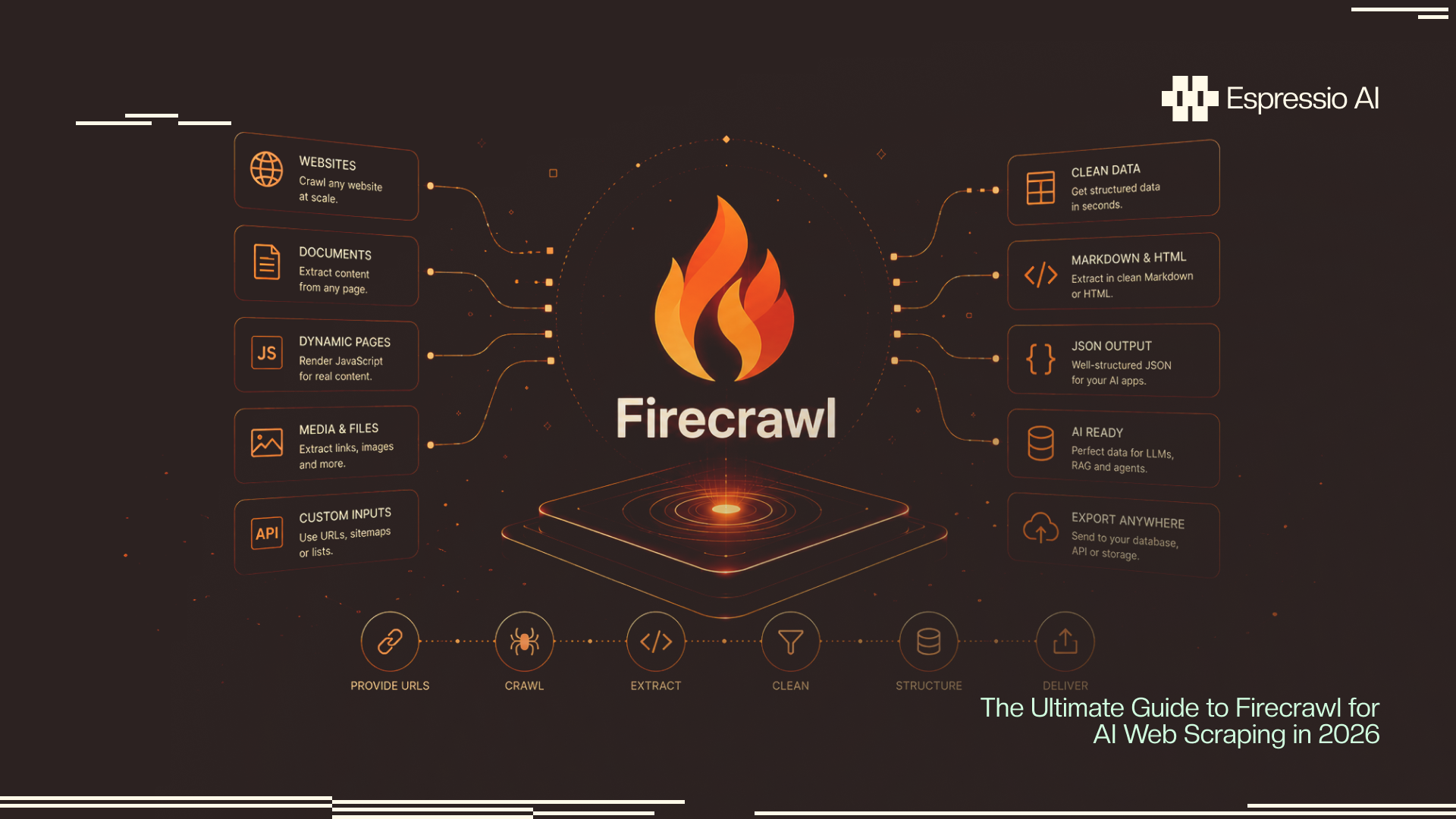
Start with what you can observe. Website intent tools (Clearbit Reveal, Albacross, 6sense) show which companies visit your site and which pages hold their attention. CRM activity signals reveal intent gradients — a prospect who’s opened four emails and clicked twice is different from one who opened once and went cold. An built with Firecrawl and Claude alerts your team when a prospect mentions a competitor, either as a frustrated customer or an active evaluator. Job changes, new funding, expanding headcount, and new SDR hiring (a reliable signal that someone is scaling outbound) round out the picture.
Trigger logic
With signals flowing in, map each to an action tier. A high-intent signal (pricing page visit plus an open proposal) escalates directly to a rep with a Slack alert. A low-intent signal (first website visit from a known account) triggers enrichment and adds to a nurture sequence. Not every signal needs a human response. The job is deciding which ones do, and building that decision into the workflow before any automation runs.
How do you decide which signals are worth acting on immediately? Start with your highest-value account tier, map every signal you’d want a rep to know about, then work backwards to define the escalation threshold for everyone else.
Human handoff
Every automated sequence needs a defined handoff point. “After three automated touchpoints with no reply, if the account is Tier 1, pause the sequence and notify the AE” is a system. Without this defined, automation runs indefinitely on accounts a human should have touched weeks ago.
Your work at scale only when context exists to make them relevant. Signal-first architecture provides that context.
Sellers who partner effectively with AI are 3.7x more likely to meet quota (Gartner Seller Survey, September 2024, n=1,026). The multiplier comes from using AI to surface the right signal at the right moment, not from replacing the human who acts on it.
Citation capsule: Sellers who partner effectively with AI are 3.7x more likely to hit their quota, and sales organizations providing AI-enabled next best actions are 2.6x more likely to achieve commercial growth, per Gartner research from September 2024 and May 2026. Signal-first automation, triggered by buyer behavior rather than arbitrary calendar intervals, is the architecture behind both outcomes.
The 4 Warning Signs Your Automation Is Breaking the Customer Journey
78% of sellers missed quota in 2025, up from 69% the prior year, per the Ebsta x Pavilion GTM Benchmarks analysis of 655,000+ opportunities. Most had automation tools. The problem was automation running without signals, firing on schedule regardless of what buyers were actually doing.
Four failure patterns show up repeatedly:
1. Sequences that ignore reply signals
If your automation continues sending emails after a prospect has already replied through a different touchpoint, your system isn’t reading its own data. This is a configuration problem, but its effect on the buyer is indistinguishable from spam. Reply detection should be a required condition in every sequence — not an optional setting.
2. Treating high-value accounts like MQL nurture
A $200K ARR prospect shouldn’t receive the same automated sequence as a $10K MQL. High-value accounts need human orchestration: custom touchpoints, direct rep involvement from the first contact, and executive alignment early. If your automation can’t distinguish between account tiers, your close rates will reflect that.
3. Dirty CRM data amplified by automation
Automation runs on whatever’s in your CRM. If contacts are duplicated, company data is stale, or lifecycle stages are misassigned, your automation fires to the wrong segments or fails to fire at all. Delayed deals reduce win rates by 113%, according to the Ebsta GTM Benchmarks (2025). CRM hygiene isn’t an IT project — it’s a revenue protection measure. It’s also Phase 0 of any automation implementation.
4. Removing humans from the proposal and closing stages
The highest-leverage moment in any B2B deal is the proposal review conversation. Automating the delivery of a proposal without scheduling a live walkthrough is a common and costly mistake. Buyers who receive a proposal without a human context-setting call evaluate it on price alone, because nothing else has been framed for them.
What’s the pattern? Each one is automation running faster than judgment. The fix isn’t less automation. It’s more deliberate design from the start.
Citation capsule: 78% of sellers missed quota in 2025 (the worst rate in six years) and delayed deals reduce win rates by 113%, per Ebsta x Pavilion GTM Benchmarks analysis of over 655,000 opportunities. These aren’t technology failures. They’re workflow design failures: automation running without buyer signals, on accounts it shouldn’t be touching, at moments when a human should have stepped in.
What ROI Actually Looks Like (And When to Expect It)
83% of sales teams that adopted AI reported revenue growth, compared to 66% of teams that didn’t (Salesforce State of Sales, 2024). The gap is real. But the timeline between “we implemented automation” and “we’re seeing revenue growth” isn’t 30 days. Pretending it is sets up teams for abandonment before they hit the inflection point.
Why does revenue impact take 6–12 months to show up? Because the gains compound slowly — data quality improvements unlock better scoring, which unlocks better sequences, which unlocks better rep conversations. Each layer depends on the one before it.
Month 1: Process mapping and data cleaning (0% ROI, 100% necessary)
Before any workflow runs, you need to know exactly what you’re automating and trust the data it’ll run on. Map every manual step. Define your ICP tier criteria. Audit your CRM for duplicate contacts, missing fields, and stale lifecycle stages. This phase looks invisible from the outside, but it determines everything that comes after.
Month 3: Lead scoring active, first time savings visible
By month 3, automated lead scoring and routing should be live. Tier 1 leads go directly to reps; Tier 2 enter a nurture sequence. Reps report the first meaningful time savings — typically a 10–15% reduction in admin hours. Signal-triggered sequences start replacing the first time-triggered ones.
Month 6: Signal sequences firing, rep behavior shifting
Signal-first sequences are running. Pre-call briefs are automated. Meeting scheduling is fully self-serve. Reps who were spending 8 hours a week on CRM entry are spending 3–4. That recovered time reinvests into more prospecting and more conversations. Teams that reinvest AI time savings into high-impact activities are 2.2x more likely to exceed customer growth goals (Gartner, May 2026).
Month 12: Revenue outcomes visible
McKinsey estimates generative AI could unlock $0.8–$1.2 trillion in productivity across sales and marketing (McKinsey, 2023 research). At the team level, one RevOps operator running a signal-first AI stack drives the output of a 5-person manual outbound team, not because AI does the selling, but because it removes everything that isn’t.
From building this internally: Espressio AI’s own RevenueOS implementation reduced pre-call research time from 25 minutes to under 5 minutes per prospect. Meeting booking dropped from 2–3 email exchanges to a single link. The time freed up went directly into more first conversations, not more admin.
Citation capsule: 83% of sales teams using AI reported revenue growth in 2024, compared to 66% of non-AI teams, per Salesforce’s State of Sales. McKinsey estimates generative AI could unlock $0.8–$1.2 trillion in sales and marketing productivity (2023 research). The ROI realization curve runs 12 months, not 12 days: month 1 is process mapping, month 3 is first time savings, month 6 is behavioral change, month 12 is revenue impact.
Frequently Asked Questions
What tasks should be automated in a sales workflow?
Lead qualification and scoring, CRM data entry and contact enrichment, signal-triggered follow-up sequences, meeting scheduling, pre-call research briefs, and weekly pipeline reporting. These tasks are high-volume, low-judgment, and directly measurable. Automation typically saves 10–15 hours per rep per week on this category alone, per Salesforce and Forrester data from 2024.
How do I automate my sales process without losing the human touch?
Apply the automation ceiling: automate logistics and data tasks, never automate discovery calls, personalized proposals, or post-close onboarding. Signal-triggered sequences — fired by buyer behavior, not calendar intervals — feel relevant because they are. Time-triggered blasts feel robotic because the timing is arbitrary. The difference is context: one has it, the other doesn’t.
What is the ROI of sales workflow automation?
83% of AI-enabled sales teams reported revenue growth vs. 66% of non-AI teams (Salesforce, 2024). Reps using AI effectively are 3.7x more likely to hit quota (Gartner, Sep 2024). Most growth-stage teams see meaningful time savings by month 3 and revenue impact by month 6–12. Data quality is the gating factor for how fast you move through the curve.
How does CRM automation improve sales productivity?
CRM automation eliminates the two largest time sinks: manual data entry and manual reporting. The Forrester Activity Study (n=3,031 reps) found the average rep loses nearly two full working days per week to admin tasks. Automated CRM enrichment via tools like Apollo, Clearbit, or Clay logs contact data, call summaries, and deal updates without rep input — redirecting that time to prospect conversations.
What are the most common sales automation mistakes to avoid?
The four most common: (1) automating before fixing your underlying process — automation amplifies broken workflows, not just healthy ones; (2) using time-triggers instead of signal-triggers; (3) running the same sequences on high-value accounts as on mid-market MQLs; (4) removing humans from the proposal and closing stages. Each is recoverable. Catching them in the design phase is faster than rebuilding after the fact.
Conclusion
Sales workflow automation isn’t a silver bullet. 78% of sellers missed quota in 2025, and most had automation tools. The gap between automation that scales revenue and automation that breaks trust isn’t the technology; it’s the design.
The framework is clear:
- Automate the 72% — the admin, the scheduling, the data entry, the reporting
- Protect the ceiling — discovery calls, proposals, and post-close onboarding stay human
- Build signal-first, not time-first — trigger on buyer behavior, not arbitrary intervals
- Plan for 6–12 months — data quality is the gating factor; the ROI curve is real but not instant
If you want us to build this for your team, let’s chat.