Kimmo Hakonen
Chief Innovation Officer
Insights, strategies, and real-world playbooks on AI-powered marketing.
JUL 3, 2026
Lovable AI: The Complete Guide to Building Apps for Growth Teams (2026)

In May 2026, Lovable crossed $500M in annualized revenue. It now has more than 8 million users, all acquired in under 18 months of commercial operation. (Sacra, 2026; TechCrunch, 2025). More than half of Fortune 500 companies have employees using it.
Growth-stage teams know this problem: engineering is always bottlenecked. Marketing, RevOps, and GTM leads have ideas for dashboards, tracking tools, and automation UIs that never get prioritized. Hiring a contractor takes weeks and costs thousands. The backlog just grows.
Lovable changes that equation. You describe what you want in plain English, and it ships a full-stack app with a live URL. What follows is a practical breakdown of what Lovable actually is, what it costs, how it compares to Bolt.new and Cursor, and how to use it to build real GTM tools. We’ve included a step-by-step build of a forward-deployed engineer–style lead scoring dashboard, complete with the exact prompt sequence and credit costs.
Key Takeaways
- Lovable is a full-stack AI app builder (React + TypeScript + Supabase) with 8 million users and $500M ARR as of mid-2026 — the fastest-growing vibe-coding platform. (TechCrunch, 2025; Sacra, 2026)
- Growth teams use Lovable to build lead scoring dashboards, competitor monitoring apps, and investor-demo prototypes in hours — without writing code or hiring engineers.
- The Pro plan ($25/mo) covers most solo and small-team use cases; enterprise pricing starts at $500+/mo with SSO and audit logs.
- Lovable’s core advantage over Bolt.new and Cursor: native Supabase integration, GitHub sync, and full-stack generation from a single prompt — no manual backend setup.
- Know the limits: Lovable isn’t the right tool for regulated industries (HIPAA, fintech), complex async backend logic, or apps expecting millions of concurrent users.
What Is Lovable AI? (How the Platform Actually Works)
Lovable is an AI-powered full-stack web app builder with 8 million users, $500M ARR, and a $6.6B valuation. The $330M Series B was led by CapitalG and Menlo Ventures, with Nvidia and Salesforce Ventures among the participants. (Lovable, 2025). You describe what you want in natural language, and Lovable generates production React + TypeScript code, configures a Supabase database with proper schema, wires up authentication, and deploys to a live URL. No boilerplate. No environment variables. No manual backend setup.
Lovable started life as GPT Engineer, an open-source project that hit 50,000+ GitHub stars before the team rebranded and launched commercially in November 2024. (GitHub / Lovable blog, 2024). It hit #1 on Product Hunt on launch day. Today it creates more than 100,000 new projects every single day. (Lovable blog, 2025).
The platform runs two development modes. Chat Mode is collaborative and iterative: you and the AI build together, refining as you go, which works well for planning complex apps. Agent Mode is autonomous. Lovable takes multi-step actions, proactively debugs, and can run web searches to find documentation or API specs without you asking.
Plan Mode, launched in February 2026, is the feature that matters most for non-technical builders. Before writing a single line of code, Lovable shows you exactly what it intends to build: the database schema, frontend components, auth setup, and deployment config. You review and approve. This single feature eliminates most of the frustrating prompt loops that plagued earlier vibe-coding tools.
The code it outputs is real, exportable React and TypeScript. Not locked in a proprietary format. You can push everything to GitHub at any point and walk away from Lovable entirely.
Citation Capsule - H2-1: Lovable launched commercially in November 2024 as a rebranded GPT Engineer (50,000+ GitHub stars). By mid-2026 it had 8 million users, $500M ARR, and a $6.6B valuation after a $330M Series B led by CapitalG and Menlo Ventures. It creates more than 100,000 new projects daily. (TechCrunch, 2025; Lovable, 2025; Sacra, 2026)
Core Features — What Lovable Can Do Out of the Box
Most AI builders generate frontend UI and stop there. Lovable’s differentiator is the depth of what it generates without any additional configuration. The full stack: frontend, backend, database, auth, and hosting, all comes from a single prompt. (Lovable blog, 2025). Does that matter for growth teams? Only if you’ve ever watched a backend setup eat two days of a contractor’s billable time.
Supabase integration is native, not bolted on. Lovable automatically provisions a PostgreSQL database, sets up auth flows (email/password, OAuth), creates proper row-level security policies, and handles migrations, all from natural language prompts. It supports real-time subscriptions, so dashboards update live as data changes. That’s something most AI builders simply don’t offer.
GitHub sync is two-way. Changes made in Lovable push to your repo; changes pushed from GitHub reflect in Lovable. This means you can hand off to a real developer without losing the codebase. Your engineering team can review, extend, and maintain the code in their normal workflow.
Lovable Cloud, available since October 2025, bundles built-in hosting, database, file storage, and an AI feature runtime. No external accounts required to get a live URL. Lovable also ships a Visual Edits / Design View (launched August 2025) that lets you click any element and modify it directly. It feels closer to Figma than a code editor.
Other built-in capabilities worth knowing: AI image generation (no separate service or credits), voice input for describing features, and a native Semrush integration (launched May 2026) that gives all Lovable users access to Semrush’s 28-billion-keyword dataset for SEO-aware app building.
Citation Capsule - H2-2: Lovable generates React + TypeScript code that exports to GitHub with no vendor lock-in. Its native Supabase integration automatically provisions PostgreSQL, sets up auth, creates RLS policies, and supports real-time subscriptions, all from natural language. These capabilities distinguish it from frontend-only AI builders like Bolt.new. (Lovable, 2025)
Who Is Lovable Actually For?
Lovable is strongest for three personas: non-technical founders validating an idea before hiring engineers, growth and RevOps teams who need internal tools that engineering keeps deprioritizing, and technical founders who want to move 5-10x faster on prototypes without writing boilerplate. More than half of Fortune 500 companies now have employees using Lovable-built tools. (Lovable, 2025).
The forward-deployed engineer model describes exactly this dynamic. Lovable lets a single growth engineer serve the GTM function of a full product team for internal tooling. One person with a clear use case and a Pro plan can replace three to four weeks of engineering queue time.
Lovable is not the right tool for enterprise dev teams building production SaaS with millions of users. It’s also wrong for regulated industries. Don’t build apps handling PHI (HIPAA), PCI data, or government-classified data in Lovable. The AI-generated security and RLS policies have not been independently audited for compliance.
For complex async backend logic (webhook processors, Slack bot workers, Python-based ML pipelines, job queues), Replit is a better fit. Lovable’s Supabase Edge Functions handle simple cases, but anything requiring a persistent server-side process is outside its sweet spot.
Growth team-specific use cases where Lovable shines: lead scoring UIs, CRM dashboards, competitor trackers, outbound personalization tools, investor demo apps, and onboarding flow prototypes. If engineering would deprioritize it and a Google Sheet feels too limiting, Lovable is probably the right answer.
Lovable Pricing in 2026 — Plans, Credits, and Real Costs
Lovable has four tiers: Free, Pro ($25/mo), Business ($50/mo), and Enterprise (custom, ~$500+/mo). The credit-based model means actual costs run 2-3x the plan price for active projects, once Cloud and AI inference billing are factored in. (Superblocks review, 2026).
| Plan | Price | Monthly Credits | Key Features |
|---|---|---|---|
| Free | $0 | 30 build credits + 20 Cloud credits | Public projects only, no custom domains |
| Pro | $25/mo | 100 credits + rollovers | Private projects, custom domains, code editing |
| Business | $50/mo | 100 credits + rollovers | All Pro features + SSO, data training opt-out |
| Enterprise | Custom (~$500+/mo) | Custom | SSO, audit logs, custom SLAs, dedicated support |
Credits scale predictably with complexity. A button style update costs roughly 0.5 credits. An auth system runs about 1.2 credits. A full landing page from scratch is around 1.7 credits. These numbers matter when you’re planning a multi-feature GTM tool build.
The hidden costs are Lovable Cloud usage: database reads and writes, bandwidth, and file storage, all billed separately on a usage basis. If you’re building an internal dashboard with light traffic, these costs are negligible. Hit real production traffic, and they’ll show up on your bill.
A few things worth knowing: credits roll over month to month on Pro and Business plans, making burst usage more economical than daily drip usage. Students get 50% off Pro ($12.50/mo) via lovable.dev/students. The Free plan’s 30 credits is genuinely enough to build and test simple apps. It’s not a bait-and-switch limit.
Citation Capsule - H2-4: Lovable’s Pro plan costs $25/mo for 100 build credits with rollover. In practice, shipping a full working app costs 2-3x the plan price once Lovable Cloud and AI inference billing are included. The Free plan includes 30 build credits per month, enough to prototype and test a simple internal tool. (Superblocks review, 2026)
Lovable vs. Bolt.new vs. Cursor vs. Replit Agent
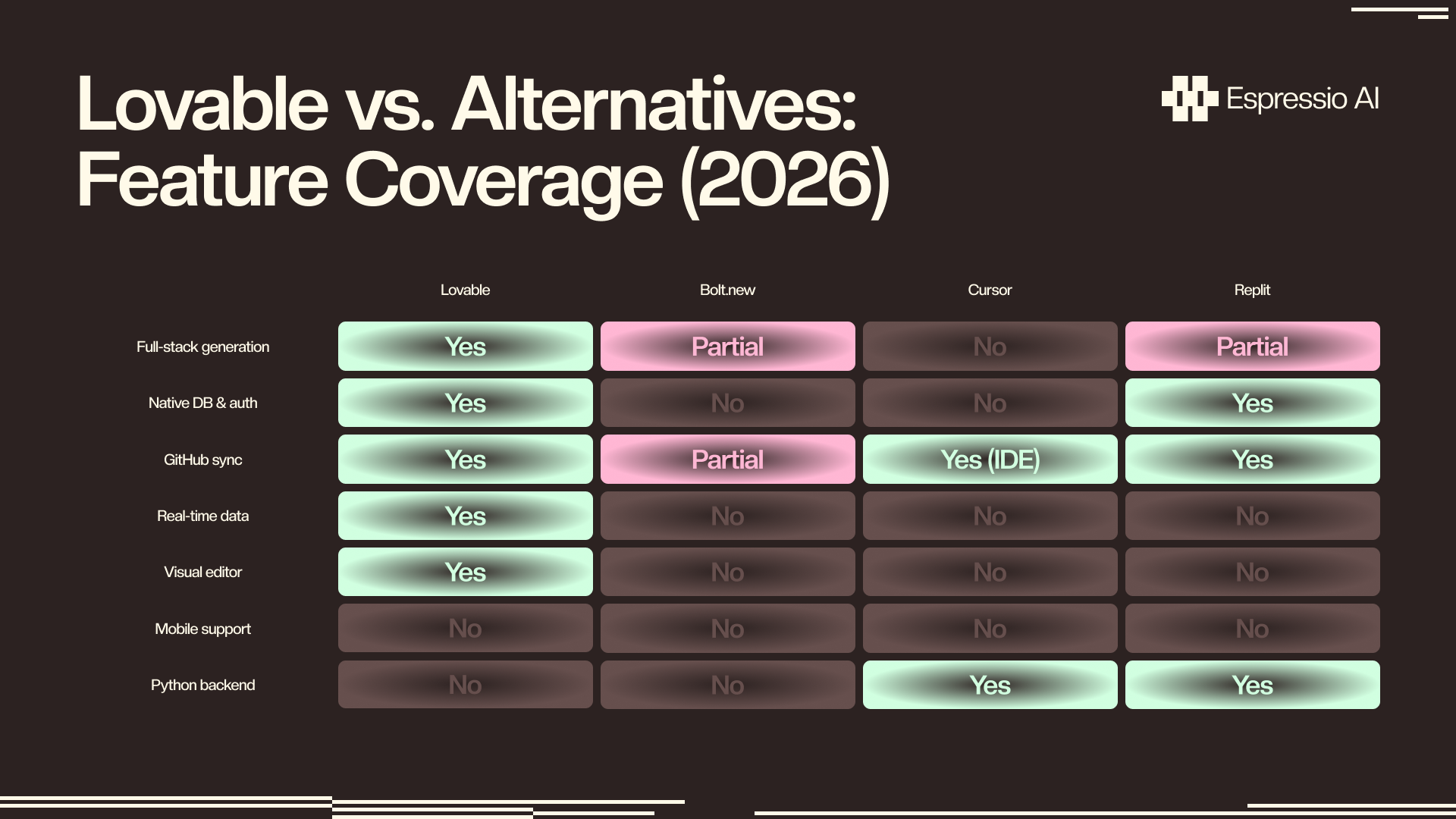
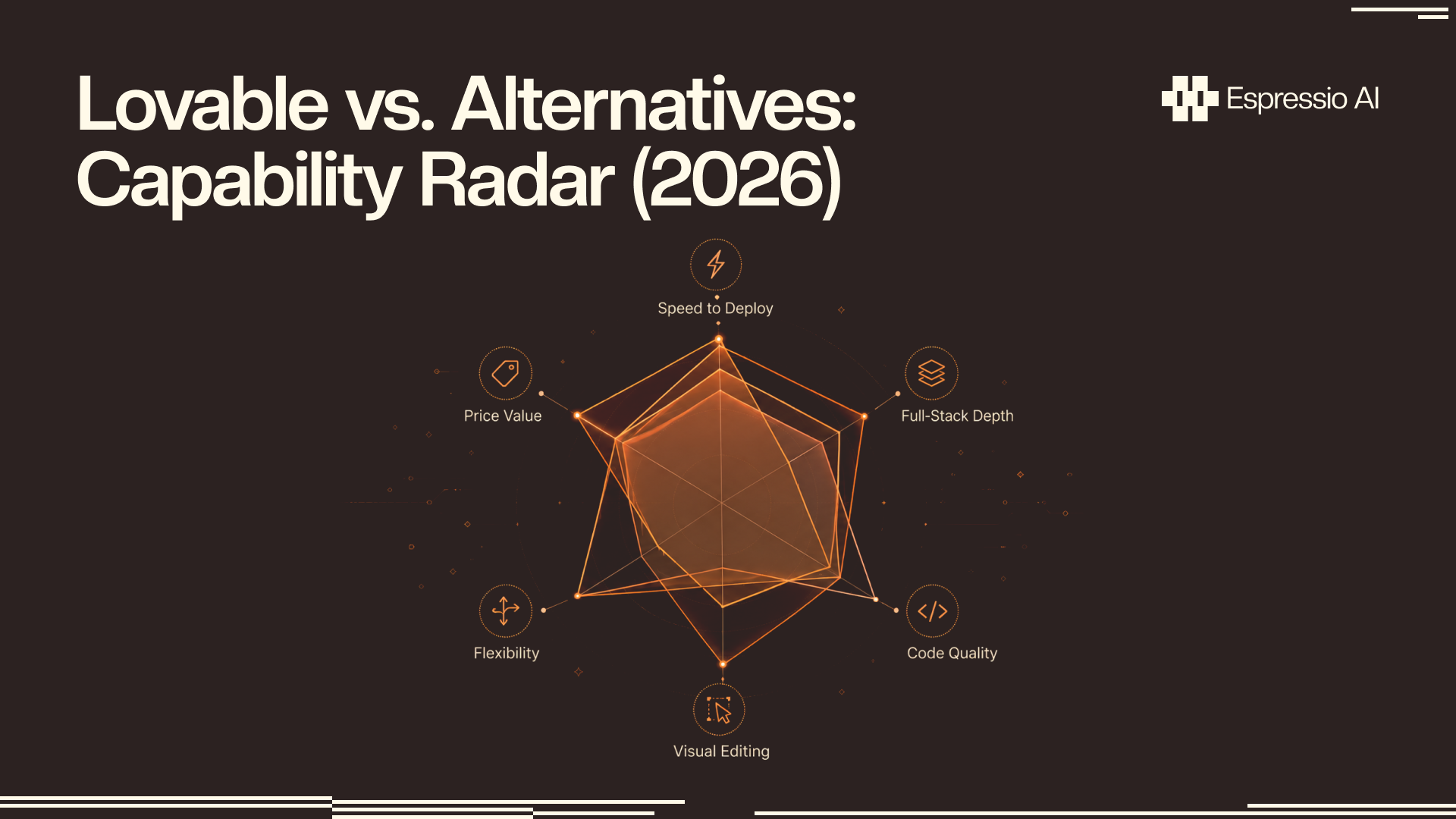
Choose Lovable when you need a full-stack app (frontend plus database plus auth) without touching a terminal. Bolt works best for pure frontend prototypes that need to be live fast. Cursor is the pick for developers who want AI acceleration inside a real IDE. Replit wins for production backend services requiring persistent server-side logic. Bolt Pro runs $25/mo, the same as Lovable Pro, but Lovable’s native Supabase integration typically eliminates $25-50/mo in separate backend tooling costs. (hellocrossman.com, 2026).
| Lovable | Bolt.new | Cursor | Replit Agent | |
|---|---|---|---|---|
| Best For | Full-stack apps, internal tools | Fast frontend prototypes | AI-assisted coding in IDE | Server-side/backend apps |
| Price | $25/mo | $25/mo | $20/mo | $25/mo |
| Stack | React + Supabase | Node.js/Express | Any language | Express, FastAPI, Go |
| GitHub Sync | Yes (two-way) | Partial | Native (it’s an IDE) | Yes |
| Native Database | Supabase (built-in) | Manual setup | Manual setup | Built-in |
| Code Export | Full React/TS | Yes | You own the code | Yes |
| Visual Editor | Yes (Design View) | Limited | No | Limited |
| Python Backend | No | No | Yes | Yes |
Bolt is faster to a first deployed URL. Lovable generates higher-quality code. That’s the real trade-off, and it matters at different stages of a build. For a quick landing page to test a headline, Bolt wins. For anything requiring user accounts, stored data, or real-time updates, Lovable is the faster path overall.
Cursor isn’t a no-code tool. It’s a code editor with AI assistance built in. Including it here is only relevant because Espressio’s audience writes code sometimes. If you’re choosing between Lovable and Cursor, you’re really choosing between “describe what I want” and “accelerate how I code.” They’re different activities.
Replit wins for Python workloads, webhook processors, Slack bots, and anything needing a persistent process. Lovable’s JavaScript/TypeScript-only stack (via Supabase Edge Functions) doesn’t support these patterns well. v0 from Vercel is also worth knowing about: strong for React component libraries, but it doesn’t generate full applications.
Citation Capsule - H2-5: Lovable Pro costs $25/mo, the same as Bolt.new, but Lovable’s native Supabase integration eliminates $25-50/mo in separate backend tooling. For growth teams building internal tools requiring auth and database, Lovable’s full-stack generation is faster end-to-end than Bolt’s frontend-first approach plus manual backend setup. (hellocrossman.com, 2026)
Lovable Use Cases for Growth Teams
The highest-ROI use of Lovable for a growth team is building the internal tooling that engineering keeps deprioritizing. Gartner forecasts that 70% of new enterprise applications will use low-code or no-code technologies by 2026, up from less than 25% in 2020. (Gartner via Adalo, 2025). For GTM teams, that statistic describes a shift already underway: teams aren’t waiting for engineering anymore.
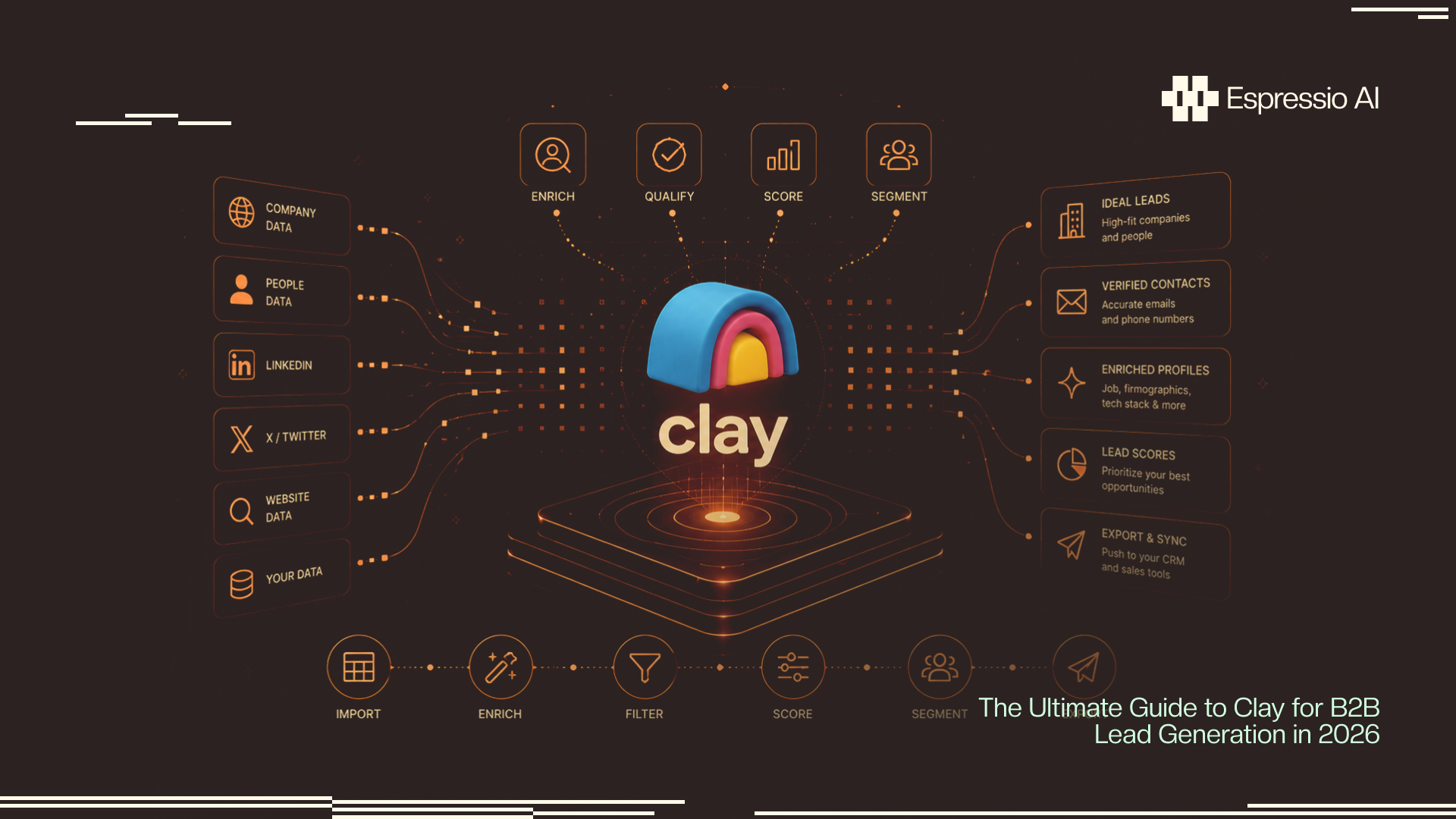
Lead scoring dashboard. Pull data from your CRM or enrichment tool (Apollo, Clay), score leads by ICP fit, and display them in a Supabase-backed React app with filterable columns and color-coded score badges. Build time: 2-4 hours.
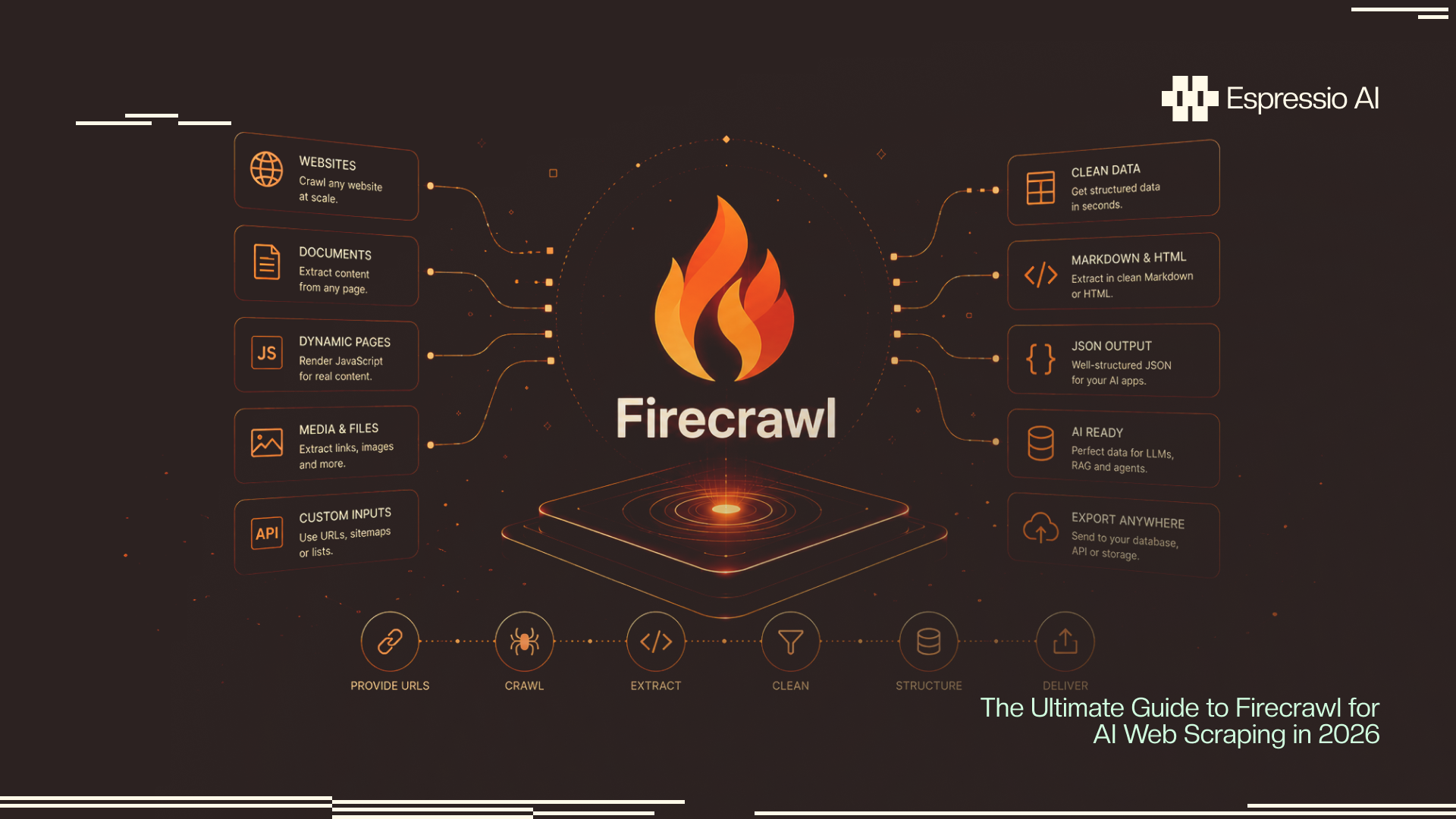
A competitor monitoring app pairs Lovable to scrape competitor pages and surface changes in a real-time dashboard. Lovable handles the UI and the Supabase backend; Firecrawl handles the data collection. Build time: 3-5 hours.
A cold email performance tracker pulls campaign data from your email tool, displays open/reply/meeting rates, and segments by persona. This is exactly the kind of dashboard that’s always on someone’s wishlist and never makes it into a sprint. Build time: 1-2 hours.
Investor demo prototype. A full-stack app with auth, database, and polished UI looks like a real product to investors. Because it is one. Build time: 4-8 hours, depending on feature complexity.
Sales enablement tool. Combine to build custom routing UIs, territory assignment dashboards, or deal-stage trackers. These are exactly the tools that sales ops teams request and never get prioritized.
Citation Capsule - H2-6: 70% of new enterprise applications are expected to use low-code or no-code technologies by 2026, up from less than 25% in 2020 (Gartner). For growth teams, this means the tooling gap between what engineering builds and what GTM needs is closing. Lovable is the primary mechanism. (Gartner via Adalo, 2025; Integrate.io, 2026)
Step-by-Step — Building a Lead Scoring Dashboard with Lovable
The workflow below builds a functional lead scoring dashboard in Lovable, from blank prompt to deployed Supabase-backed app, in under four hours. GitHub’s Copilot research found developers complete coding tasks 55% faster with AI assistance; non-technical growth practitioners using Lovable can compress weeks of engineering into a single afternoon. (GitHub Copilot study, 2025).
Step 1 — Enable Plan Mode First
Plan Mode prevents misunderstandings on complex builds. Before writing any code, paste this prompt:
“Use plan mode. I want to build a lead scoring dashboard. It should let me import leads via CSV, score each lead from 1-10 based on industry, company size, and job title, and display them in a filterable table with color-coded score badges.”
Step 2 — Review and Approve the Plan
Lovable will propose a database schema (leads table, scores table), frontend components (upload widget, data table, filter sidebar, score badges), auth (email login), and deployment config. Read it. If the schema doesn’t match your mental model, correct it here before a single line of code is written.
Step 3 — Connect Supabase
Lovable prompts for your Supabase project credentials or creates a new Lovable Cloud project automatically. Either way, the database schema and row-level security policies generate without manual SQL.
Step 4 — Iterate with Chat Mode
Once the base app is built, use Chat Mode to add specifics:
“Weight company size 40%, industry 35%, job title 25%.”
“Add a CSV export button for filtered results.”
“Make the score badges green above 7, yellow 4-6, red below 4.”
Each of these changes runs 0.3-0.7 credits. They’re fast to generate and easy to verify.
Step 5 — Connect GitHub
Enable two-way GitHub sync before making major changes. This creates a recovery point and lets your engineering team review or extend the code in their normal workflow. Don’t skip this step.
Step 6 — Deploy
Lovable deploys to a live URL via Lovable Cloud. Share with your team immediately. No DNS configuration, no hosting account, no deployment pipeline.
Credit cost estimate: This full build runs 8-15 credits total, approximately $2-$4 on the Pro plan. Complex scoring logic and custom styling push toward the higher end; a simpler filterable table stays near the lower end. This is the actual cost we’ve tracked across similar GTM tool builds, and it’s consistently in this range for dashboards of this complexity.
Once your lead scoring output is running, you can close the loop from scoring to outreach without any manual handoff.
Citation Capsule - H2-7: A full lead scoring dashboard in Lovable (CSV import, ICP scoring logic, filterable table, color-coded badges, Supabase backend, auth, and deployment) costs 8-15 credits, or approximately $2-$4 on the Pro plan. GitHub’s Copilot research found developers complete coding tasks 55% faster with AI assistance; Lovable eliminates the need for developer involvement entirely on eligible GTM tools. (GitHub Copilot study, 2025; Espressio, 2026)
When NOT to Use Lovable — Honest Limitations
Lovable gets you to approximately 70% of a production-ready app fast. The final 30% (complex business logic, edge case handling, enterprise security) is where it struggles and where you’ll burn credits in frustrating loops. About 45% of developers in the 2025 Stack Overflow Developer Survey cited debugging AI-generated code as their top frustration, reporting it often takes longer than anticipated. (Stack Overflow Developer Survey, 2025). That’s a real cost you need to plan for.
Regulated industries. Don’t build apps handling PHI (HIPAA), PCI data, or government-classified information in Lovable. The AI-generated security and RLS policies are functional for standard use cases, but they haven’t been independently audited for compliance. Wrong tool for the job.
Complex async backend logic. Webhook processors, Slack bot workers, Python-based ML pipelines, and job queues are outside Lovable’s stack. Supabase Edge Functions handle simple serverless logic, but anything requiring a persistent process needs Replit or a real backend.
Large team collaboration. Lovable works well for solo developers or small teams. There’s no branching, no code review workflow, no merge conflict resolution. GitHub sync helps, but it doesn’t solve the collaboration gap for teams of five or more.
Production scale. Supabase scales reasonably well, but the data structures in Lovable-generated apps are often inflexible. Before serious user traffic, you’ll likely need custom architecture that goes beyond what Lovable can generate.
Debugging hell. When something breaks in a complex Lovable app, prompt-based debugging can spiral. You’ll spend credits trying variations of the same fix. Knowing when to export to GitHub and debug in a real IDE rather than burning another five credits on a prompt loop is a skill that saves real money.
The reframe that most Lovable reviews miss: the 70% ceiling is a feature for growth teams, not a bug. Growth teams don’t need production-grade apps. They need demo-grade apps to validate ideas before requesting engineering resources. Getting to 70% in four hours beats getting to 0% in two weeks waiting for the backlog to clear — every time. Lovable is a GTM validation layer, not an engineering replacement. Use it that way, and the limitations stop feeling like limitations.
Citation Capsule - H2-8: 45.2% of developers report that debugging AI-generated code takes longer than writing code from scratch (Stack Overflow Developer Survey, 2025). For growth teams using Lovable, this means recognizing when to export to GitHub and debug in a real IDE, rather than spending credits on prompt-based debugging loops for complex edge cases.
The ROI Case — What Lovable Actually Saves Growth Teams
At $25/month and four to eight hours of build time, a Lovable-built internal tool replaces $5,000-$15,000 in contractor costs and four to eight weeks of engineering queue time for equivalent functionality. The no-code and low-code enterprise adoption rate hit 77% in 2026, up from 65% in 2024. (Integrate.io, 2026). Growth teams aren’t early adopters anymore. They’re the mainstream.
The global no-code AI platform market sits at $8.6 billion in 2026, growing to $75.14 billion by 2034 at a 31.13% CAGR. (Fortune Business Insights, 2026). Lovable’s $500M ARR in under 18 months is the best evidence that enterprises are paying because the value is real, not because the marketing is good.
The forward-deployed engineer playbook frames this precisely. A single growth engineer with Lovable access can serve the internal tooling function of a three-to-five person product team. That’s the productivity multiplier that justifies the tool cost by a factor of hundreds.
Total cost of ownership for most internal tooling use cases: Lovable Pro at $25/mo plus the Supabase free tier. Add Lovable Cloud costs only when apps hit meaningful production traffic. For dashboards used by five to fifteen people internally, Cloud costs stay under $10/mo.
Lovable’s $330M Series B at a $6.6B valuation, led by CapitalG and Menlo Ventures, signals that institutional investors believe this category is durable. (Lovable, 2025). That doesn’t change your build decision, but it does confirm you’re betting on a platform with runway.
Citation Capsule - H2-9: Enterprise no-code adoption reached 77% in 2026, up from 65% in 2024 (Integrate.io). The global no-code AI platform market is $8.6B in 2026, growing at 31.13% CAGR to $75.14B by 2034 (Fortune Business Insights). Lovable’s $500M ARR reflects genuine enterprise ROI from teams replacing weeks of engineering backlog with hours of AI-generated tooling.
Frequently Asked Questions About Lovable AI
Is Lovable AI Free to Use?
Yes, Lovable has a free plan with 30 build credits and 20 Cloud credits per month. That’s enough to build and test simple apps. For private projects, custom domains, and meaningful monthly volume, the Pro plan at $25/mo is the entry point. Students get 50% off Pro ($12.50/mo) at lovable.dev/students.
Does Lovable Write Real Code, or Is It Locked in a Proprietary Format?
Lovable generates real React + TypeScript on the frontend and connects to Supabase on the backend. You can export everything to GitHub at any point and never touch Lovable again. No vendor lock-in on the codebase. The code is yours from the first prompt.
How Does Lovable Compare to Bolt.new for Growth Team Use Cases?
Lovable is better for anything requiring a database, auth, or real-time data, which covers most internal GTM tools. Bolt.new deploys a frontend faster but requires more manual backend setup and doesn’t natively provision a database. For lead scoring dashboards, competitor monitors, and CRM tools, Lovable’s native Supabase integration is a clear advantage.
Can a Non-Technical Person Really Build a Working App with Lovable?
Yes, with caveats. Lovable excels at getting non-technical founders and growth practitioners to a working prototype. The more complex the app (especially around auth flows, custom business logic, and third-party integrations), the more you’ll benefit from understanding what you’re asking it to build. Plan Mode, which shows the full build plan before generating code, reduces frustration for non-technical users.
What Happens When I Hit the Credit Limit?
Credits reset monthly. On Pro and Business plans, unused credits roll over to the next month. If you run out mid-project, you can purchase additional credits or wait for the monthly reset. Projects you’ve already built stay live. Credits are consumed by generating and editing, not by hosting. Your deployed app keeps running regardless of your credit balance.
Conclusion
Lovable is the closest thing growth teams have to a software development capability that doesn’t require an engineering hire. For the use cases that matter most (internal dashboards, lead tools, demo prototypes, and quick automation UIs), it delivers in hours what would otherwise sit in an engineering backlog for months.
The ceiling is real. Don’t use it for regulated industries or production-scale infrastructure. Use it to move fast, validate the idea, and hand off to engineering with a working reference implementation instead of a 40-slide spec document. That handoff (“here’s what we built, now make it production-ready”) compresses the engineering conversation from weeks of back-and-forth into a single meeting.
If you want us to build this for your team, let’s chat.