Luka Mrkić
Head of BD
Insights, strategies, and real-world playbooks on AI-powered marketing.
APR 14, 2026
How to Deploy AI Agents on AWS Bedrock for Enterprise Marketing Teams
Your marketing team runs on repetitive workflows. Campaign briefs get copy-pasted between docs, audience segments get rebuilt from scratch every quarter, and someone assembles the same performance report every Monday morning. Content still gets localized by hand across six markets.
AI agents can take over most of that. If your company already runs on AWS, Bedrock is where you build them.
At Espressio, we build AI systems that help marketing and BD teams grow faster. I wanted to understand how enterprise-scale agent deployment actually works on AWS, so I went deep on the research. This piece is the result: the architecture, the ROI math, and the mistakes that keep showing up in the case studies.
Key Takeaways
- Epsilon deployed 20+ agents on AWS Bedrock AgentCore and cut campaign setup time by 30% (AWS re:Invent 2025, AIM395)
- Forrester found enterprises using generative AI on AWS achieved 240% ROI over three years (Forrester TEI, 2025)
- AgentCore is framework-agnostic: use CrewAI, LangGraph, or Strands Agents with any foundation model
- Start with one specialist agent for a single workflow, not a general-purpose marketing assistant
- A typical five-agent marketing stack runs roughly $2,000-5,000/month based on AgentCore pricing
What changed in AWS Bedrock over the last 12 months?
Gartner predicts 40% of enterprise applications will embed task-specific AI agents by end of 2026, up from less than 5% in 2025 (Gartner, August 2025). AWS has been shipping the infrastructure to make that happen.
Amazon Bedrock AgentCore went into preview in July 2025 and became generally available in October 2025. It’s a managed platform for deploying AI agents at production scale. You can use any framework (CrewAI, LangGraph, LlamaIndex, Strands Agents) and any foundation model (Claude, Llama, Mistral, Nova). Each agent session runs in an isolated microVM, so your data stays contained. Sessions can run up to 8 hours for complex, multi-step workflows.
What did this replace? Before AgentCore, deploying an agent meant stitching together Lambda functions, managing session state in DynamoDB, bolting on authentication, and building your own observability. AgentCore handles all that plumbing.
AWS also released Agent Registry in preview in April 2026 to address what they call “agent sprawl.” It gives you a central catalog of every agent deployed, who owns it, and what it can access. If you’re planning to scale agents across marketing, sales, and ops, you’ll hit governance problems fast without something like this.
Why are marketing teams the highest-ROI target?
75% of marketers have already adopted AI, and 82% of those using or planning to use AI agents expect moderate to major improvements in marketing ROI (Salesforce State of Marketing, 2026). Marketing work is a near-perfect fit for agents.
-
Repetitive with clear inputs and outputs. Campaign briefs follow templates. Audience segments have defined criteria. Reporting pulls from the same data sources every cycle.
-
Multi-step but rule-governed. Setting up a campaign involves audience selection, content creation, channel configuration, QA, and launch. Each step has known constraints.
-
Data-rich and digital. Your CRM, ad platforms, analytics stack, and content repositories all have APIs. Agents work best when they can plug into systems that are already connected.
-
Tolerant of human review loops. Marketing content still needs brand review. Agents that draft, assemble, and prepare work for human approval match how marketing teams already operate.
Epsilon (part of Publicis Groupe) is the best public example so far. They deployed 20+ agents on AgentCore for audience segmentation, campaign creation, and performance optimization. The results: 30% reduction in campaign setup time and 20% increase in personalization capacity (AWS re:Invent 2025, AIM395).

What does an enterprise marketing agent stack look like?
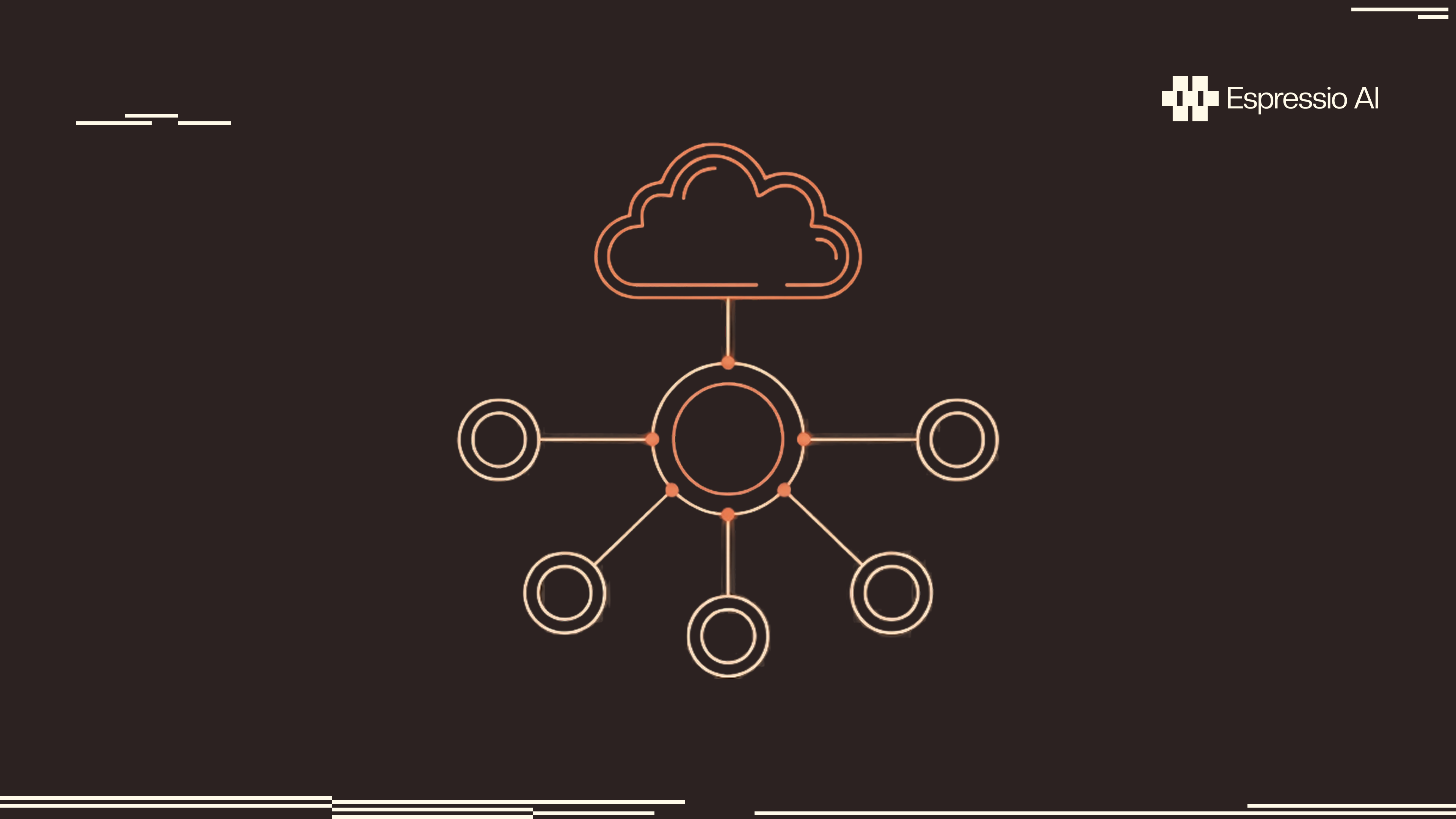
A production marketing agent system on Bedrock has three layers. Across every production deployment I’ve studied, from Epsilon to PwC, the teams that made it past proof of concept followed the same general structure. The ones that skipped layers two or three stalled within months.
Layer 1: Specialist agents
Each agent handles one workflow. For a marketing team, you’d build five to start:
| Agent | Input | Output | Model Recommendation |
|---|---|---|---|
| Campaign Brief | Launch date, audience, budget | Structured brief with channel mix and timeline | Claude (reasoning) |
| Audience Segmentation | Targeting criteria | Audience lists with size estimates from CDP/CRM | Nova (cost-efficient) |
| Content Generation | Brief + brand voice docs | Ad copy, emails, social posts | Claude (creative) |
| Performance Reporting | Analytics API data + benchmarks | Weekly summary with recommendations | Nova (high-volume) |
| Localization | Approved English content | Market-adapted content for target regions | Claude (nuance) |
Why five agents instead of one? More on that in the pitfalls section below.
Layer 2: Orchestration
A supervisor agent coordinates the specialists. When a campaign manager types “Set up Q3 product launch campaign for the DACH market,” the supervisor breaks this into subtasks and routes them to the right agents.
Bedrock supports multi-agent collaboration out of the box. The supervisor delegates tasks, each specialist executes in its own isolated session, and the supervisor combines the results into one deliverable.
AgentCore Gateway handles the integration layer. It converts your existing REST APIs and Lambda functions into tools agents can discover and call through semantic tool selection (AWS docs). Your agents query Salesforce, pull from your DAM, check inventory in your ERP, and post to your marketing automation platform. No integration rebuilds required.
Layer 3: Governance and observability
Most teams underinvest here. It’s the reason most agent projects stall before they scale.
AgentCore Identity manages authentication. Agents act on behalf of specific users, with temporary, scoped permissions. Your content agent can read the brand guidelines Knowledge Base but not modify it. Your reporting agent can pull analytics data but not change campaign settings.
AgentCore Observability tracks token usage, latency, session duration, and error rates. It also lets you trace agent decisions step by step. When the content agent produces something off-brand, you can see which inputs and reasoning steps caused it.
AgentCore Policy (GA since March 2026) lets you define guardrails for what agents can and cannot do. You can block specific actions outright or require human sign-off. Compliance checks run automatically before anything executes.
How do you get started?
The published deployment timelines are consistent: teams that pick a single workflow and commit to it get to production in 4-6 weeks. Skip the 6-month strategy phase.
Step 1: Pick your first agent by pain, not ambition.
Find the workflow where your team wastes the most time on tasks they could describe step by step to a new hire. Campaign reporting is a common starting point. So is brief generation.
Ask yourself: “If I handed someone a checklist, could they do 80% of this without asking me questions?” If yes, an agent can handle it.
Step 2: Map the data sources.
List every system the agent needs to read from and write to. For a campaign reporting agent, that might be Google Analytics, your ad platform APIs, a Google Sheet for benchmarks, and Slack for delivery. Each connection becomes a tool the agent accesses through AgentCore Gateway.
Step 3: Build the agent with your preferred framework.
AgentCore is framework-agnostic. If your team knows LangGraph, use LangGraph. If you prefer CrewAI or Strands Agents, use those. You pick the foundation model too. Claude for reasoning-heavy tasks, Nova for cost-sensitive high-volume work, or a mix depending on the agent’s job.
A basic agent setup:
- Define the agent’s role and constraints in natural language instructions
- Connect it to relevant Knowledge Bases (your brand docs, past campaign data, style guides)
- Wire up the tools it needs via Gateway
- Deploy to AgentCore Runtime
Step 4: Test with real workflows, not synthetic ones.
Give it last week’s actual campaign brief request. Have it generate last month’s performance report using real data. Compare the output to what your team produced manually. The gaps you find here are your iteration targets.
Step 5: Add the human-in-the-loop layer.
For marketing, you almost always want human review before anything goes live. Build approval checkpoints into the agent workflow. The agent drafts, a human reviews and approves, and only then does the agent execute the final step.
Where do most teams get stuck?
Gartner expects the number of enterprise apps embedding AI agents to jump from under 5% to 40% by end of 2026. Most won’t get there. The same four failure modes show up over and over in the case studies and post-mortems I’ve gone through.
Trying to build a general-purpose marketing assistant instead of specialist agents. This is the most common pattern. Stanford’s Enterprise AI Playbook found the same thing across 51 deployments. A single agent that “does marketing” will underperform five agents that each do one thing well.
Skipping data architecture. If your brand guidelines live in someone’s Google Drive folder and your campaign templates exist in three different formats, the agent will produce inconsistent output. Spend the first week organizing the data the agent needs into clean, accessible Knowledge Bases.
Ignoring cost management. Bedrock charges per token. A content agent that generates 50 campaign variants using Claude Sonnet burns through tokens fast. Use Intelligent Prompt Routing (can cut costs by up to 30%) and consider Model Distillation for repetitive tasks where a smaller, fine-tuned model works fine.
Treating governance as a Phase 2 concern. AgentCore Policy and Identity exist for a reason. Define permissions and guardrails before you scale, not after an agent posts something to your social channels that shouldn’t have gone out.
What does the ROI math look like?
Forrester’s numbers hold up at the individual deployment level too: 240% ROI over three years, $16.5 million in benefits against $4.8 million in costs, payback in under six months. That included 25% time savings for affected workers.
The Epsilon numbers are a useful operational benchmark: 30% faster campaign setup and 20% more personalization.
But the real math depends on your team size and campaign volume. If you run 200 campaigns per year and each takes 6 hours to set up, a 30% reduction gives you 360 hours back. At a blended team cost of $75/hour, that’s $27,000 in recovered capacity per year from one agent.
Scale that across five or six agents covering different workflows and you’re in six-figure territory per year. That’s before accounting for fewer errors and campaigns that actually launch on time.
The infrastructure cost? Low relative to the savings. AgentCore pricing is usage based, and Bedrock model costs have come down with features like Prompt Caching and Intelligent Prompt Routing. Based on AgentCore pricing and the architectures described above, a five-agent marketing stack runs roughly $2,000-5,000/month in compute and inference.
What’s coming next
The global AI agents market hit $7.63 billion in 2025 and is projected to reach $50.31 billion by 2030, growing at a 45.8% CAGR (Grand View Research, 2025). AWS is building for that scale.
Agent Registry, in preview, will auto-index agents built on AgentCore, Amazon Q, and Kiro without manual registration. Less governance overhead as your agent fleet grows.
The OpenAI-Amazon partnership (announced February 2026) will bring Stateful Runtime Environments to Bedrock. Agents will maintain memory, context, and tool access across workflows that span days instead of hours. For marketing teams running always-on campaign optimization, that’s a different category of automation.
Companies are moving fast. Deloitte’s 2026 State of AI report found that 25% of companies have 40% or more of their AI projects in production, with 54% expecting to reach that level within three to six months (Deloitte, 2026). The teams that started building agents last quarter now have months of production data and tuned prompts you don’t.
Frequently asked questions
What is Amazon Bedrock AgentCore?
AgentCore is AWS’s managed platform for deploying AI agents at production scale. It provides isolated microVM sessions, identity management, observability, and policy enforcement. It went generally available in October 2025 and supports any framework (CrewAI, LangGraph, Strands Agents) with any foundation model.
How much does it cost to run AI agents on AWS Bedrock?
AgentCore pricing is usage-based. Based on AgentCore pricing and typical deployment architectures, most marketing teams would spend $2,000-5,000/month on compute and inference costs. Intelligent Prompt Routing can cut model costs by up to 30%, and Model Distillation further reduces costs for repetitive tasks.
Can I use my existing APIs and tools with AgentCore?
Yes. AgentCore Gateway converts your REST APIs and Lambda functions into tools that agents can discover and call through semantic tool selection. You don’t need to rebuild integrations for platforms like Salesforce, Google Analytics, or your marketing automation stack.
How long does it take to deploy the first agent?
Based on published case studies from AWS and partners, teams that pick a single workflow (campaign reporting or brief generation) get to production in 4-6 weeks. The biggest time sink isn’t building the agent itself. It’s organizing the data and templates the agent needs into clean, accessible Knowledge Bases.
Do I need to choose one AI framework?
No. AgentCore is framework-agnostic. You can use CrewAI, LangGraph, LlamaIndex, or Strands Agents. You can also mix foundation models across agents, using Claude for reasoning-heavy tasks and Nova for high-volume, cost-sensitive work.
Luka Mrkić is Head of BD at Espressio, a team building AI systems for growth, backed by 7+ years and 300+ projects at Lunar Strategy. Before Espressio, he worked across corporate marketing and startup growth. He’s been building with AI daily since 2022.
Exploring how AI agents could fit into your marketing stack? Book a 30-minute scoping call
Follow Espressio on LinkedIn for more on AI systems for marketing and growth teams.